Fireworks Are Not Fun for Everyone

.svg)
.svg)

Join the community



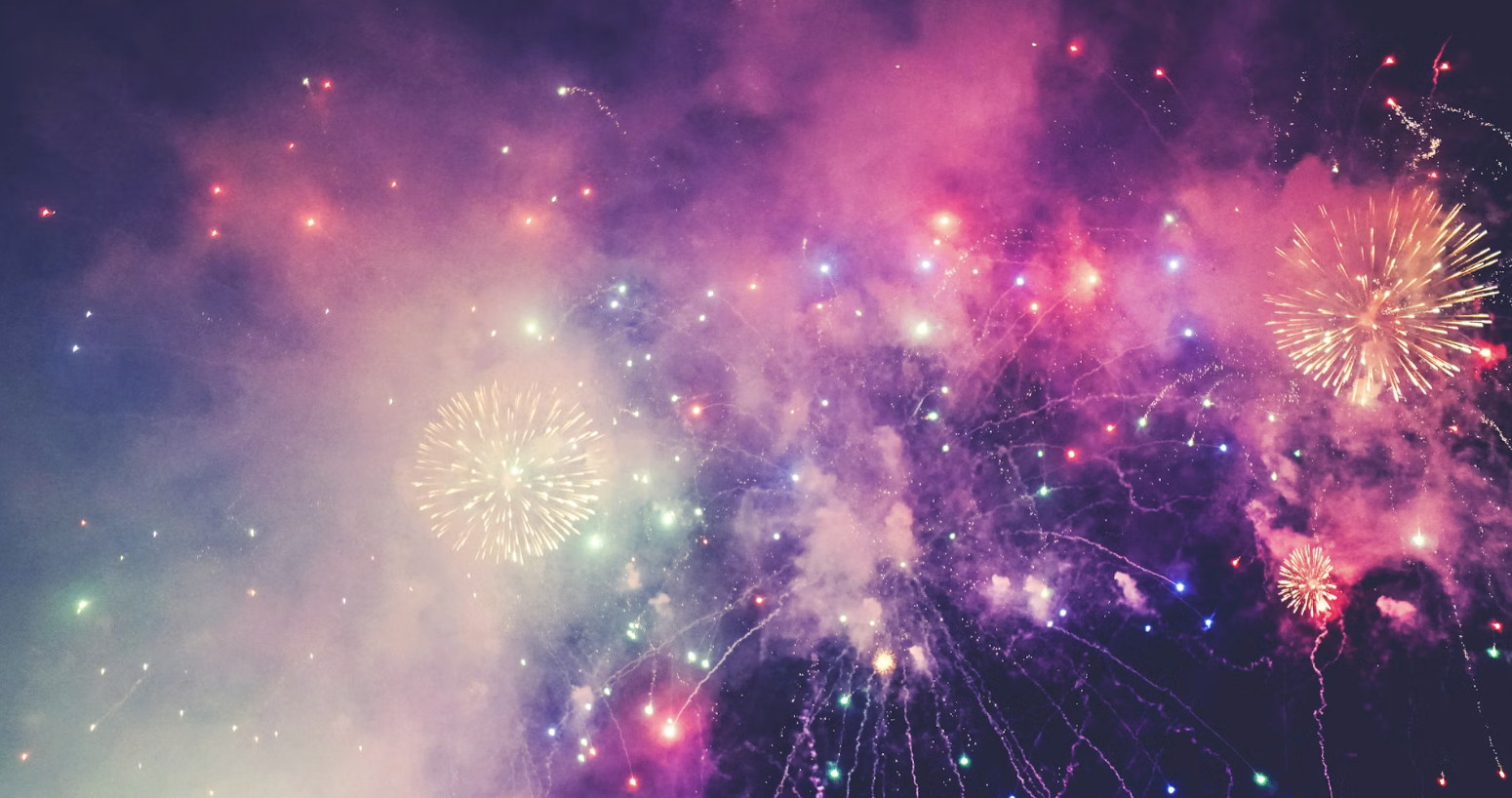
Fireworks are synonymous with Fourth of July celebrations in the U.S. This year, to mark the nation’s 250th birthday, the fireworks display in Washington will run for 40 minutes, twice the usual length. The show will also attempt to break the world record for the largest fireworks display.
But the desire to set off and watch explosives for a few minutes of entertainment leaves a long-lasting footprint on people, the planet, and other species. Here's how, and what to try instead.
How Do Fireworks Work?
The main component of fireworks is black powder (gunpowder), which is made of 75% potassium nitrate, 15% charcoal, and 10% sulphur. Pyrotechnicians, trained experts who design and handle fireworks, pack these materials into a shell in a specific order and quantity.
When the fuse is lit, it triggers a hot, gas-producing chemical reaction inside the shell that causes an explosion. To create color, elements such as strontium (red), sodium (yellow), and barium (green) are added. Combinations of elements can produce additional colors. For example, strontium and copper can create purple.
When a firework detonates, not all of the chemicals disappear. Some remain suspended in the air, while others fall back onto land and into water.
Fireworks Pollute Our Air, Water, and Soil
When the chemicals in fireworks burn and react with oxygen in the air, they release toxic atmospheric pollutants, including carbon dioxide, carbon monoxide, nitrogen, sulphur dioxide, and particulate matter (PM).
PM is one of the most hazardous air pollutants, and it can harm people’s lungs and hearts. Carbon monoxide can also hinder an organism’s ability to transport oxygen throughout its body, and nitric oxide is toxic through inhalation and skin absorption.
A 2022 study highlights that when fireworks took place in downtown Minneapolis, Minnesota, the atmospheric concentration of carbon monoxide increased by 32%, carbon dioxide grew by 17%, and nitric oxide fluctuated before “doubling overnight.”
Fireworks also affect land and water ecosystems. When fireworks burst at ground level, chemical debris is scattered widely. This includes perchlorate, which contaminates soil and water and can affect fish development and thyroid function in humans.
PM can also settle on soil and water, altering soil nutrients and making surface water more acidic. Sulphur components, such as sulphur dioxide, can damage leaves and disrupt the growth of trees and plants.
Fireworks, especially in hot and dry areas, can also ignite wildfires. From 1992 to 2015, more than 7,000 wildfires were ignited in the U.S. on the Fourth of July. In 2021, nearly 100 homes had to be evacuated in Utah due to a wildfire ignited by fireworks. With hot and dry spells becoming more common, the wildfire risk increases even more.
Several Utah and Colorado towns (e.g., Beaver City, Chaffee County) canceled fireworks entirely this year because of wildfire risk and statewide fire bans.
Fireworks Also Cause Harm to Animals
Wildlife rehabilitation centers and animal shelters are busiest on July 4 and 5, when many pets and wild animals are frightened by the noise and commotion of fireworks and run away.
Debris, including shells and heavy metals, is often left behind after a firework display. Animals can accidentally ingest these hazardous materials, which can lead to illness.
Alternatives to Fireworks
While Washington is planning its most lavish fireworks display, other cities are turning to safer alternatives, like drones. They create less debris and less noise, so they’re less likely to disrupt local plant life or frighten pets and native wildlife. They also don’t pose the same wildfire risk in drought-affected areas.
Here are some of the places that are substituting some of their Fourth of July fireworks with lasers to reduce environmental damage, while still delivering a similar level of spectacle:


%202.svg)