Everything You Need to Know About Rain Barrels

.svg)
.svg)

Join the community



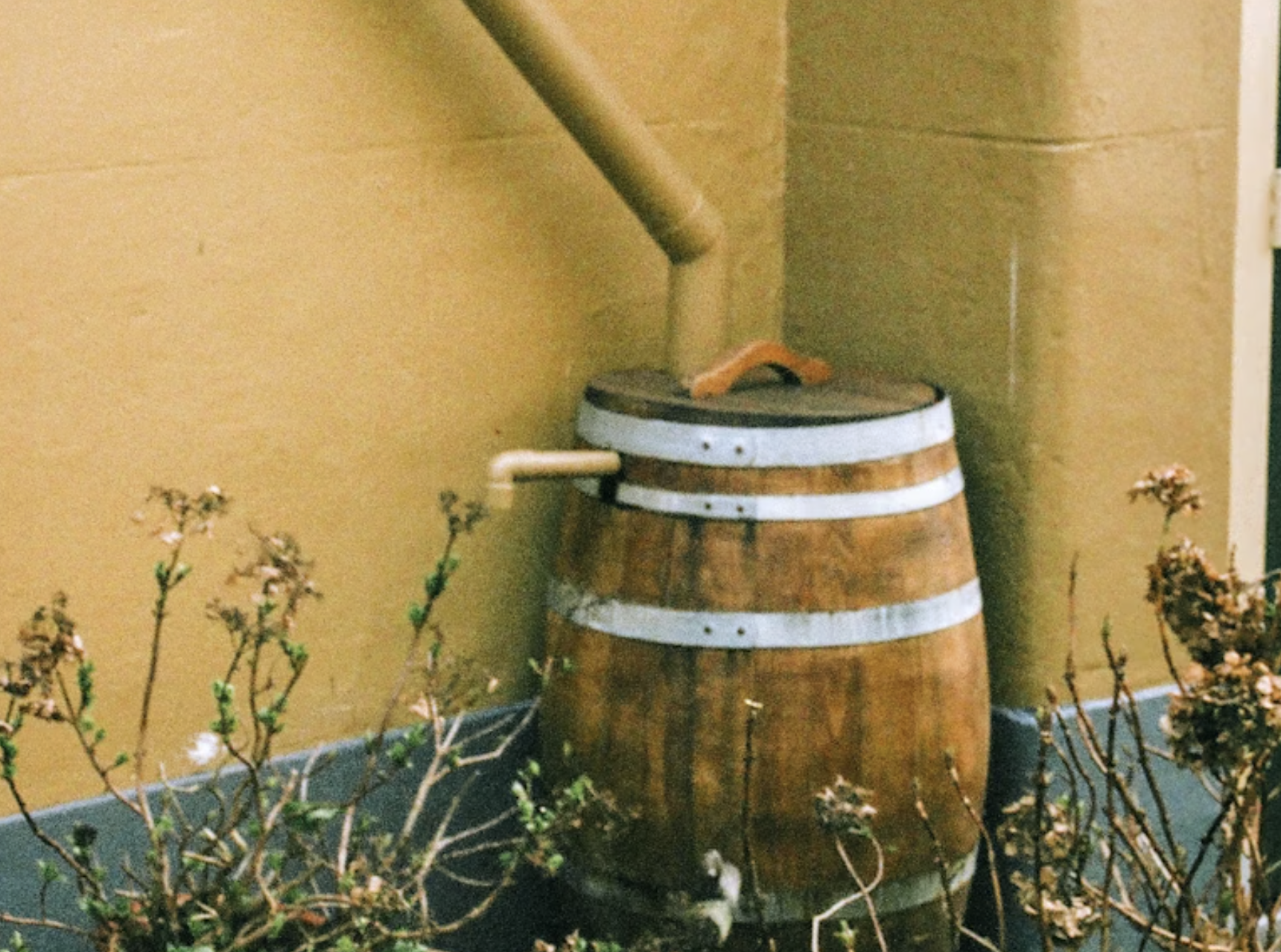
A rain barrel is one of the simplest tools for shrinking your water footprint. It catches runoff from your roof and stores it for later. You can use that to water the lawn, top up the garden, or rinse the car. That's free water you didn't have to pump, treat, or pay for. Also, you prevent it from running off into the nearest storm drain.
You may be able to pick one up through your city's annual rain barrel sale, a local watershed group, an online retailer, or a home and garden store. You can also look for secondhand options on marketplaces like Facebook Marketplace, Craigslist, or OfferUp.
You can even build your own rain barrel. The EPA has a free, well-illustrated guide for building a rain barrel from a food-grade plastic drum. It walks through the tools, parts, and full assembly. It’s a solid weekend project.
Grab the PDF here: Make a Rain Barrel (EPA)
If 50–80 gallons isn't enough, look at cisterns. They are larger above-ground or below-ground tanks built for serious rainwater harvesting.
What You Can (and Can't) Do With the Water
Use it to irrigate your lawn, water indoor and outdoor plants, fill fountains, wash the car, or clean windows. Don't drink it. Roof runoff picks up bird droppings, dust, and chemicals from shingles, so it isn't safe to drink or use in your vegetable gardens either. If you want potable rainwater, you'll need a properly designed and treated cistern system.
How to Maintain Your Rain Barrel
A well-maintained rain barrel lasts about two decades. A few habits go a long way:
- Use the water often so the barrel has room to catch the next storm.
- Before winter, drain it, scrub it with a non-toxic cleaner, and check the fittings and seals.
- Flip it upside down for the off-season so it doesn't crack from freezing water.
What does a Rain Barrel Cost and Where to Find Rebates
Most off-the-shelf rain barrels run between $55 and $120. Watershed associations and garden clubs often sell them at a discount, and many cities and utilities will pay you back with a rebate.
Before you buy, check two things: whether your state allows or regulates rainwater harvesting, and whether your local utility offers a rebate. The two tables below cover both. Start there to confirm what applies to your address. Many programs require pre-approval, so don't buy the barrel first.
Full State-by-State Directory
Statuses below:
- Legal: no special restrictions beyond standard plumbing codes
- Encouraged / Highly Encouraged: state actively promotes harvesting through guides, rebates, or tax incentives
- Regulated: specific plumbing or design codes apply
- Limited: volume caps or registration required
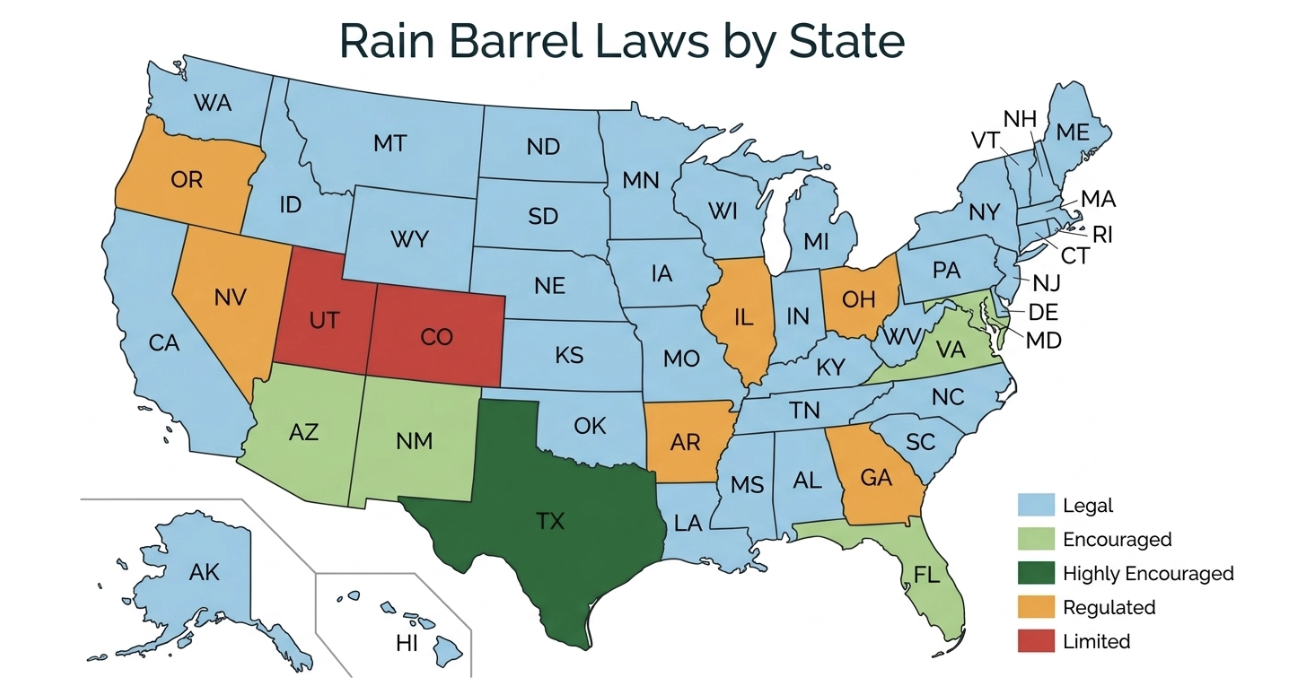
In several states (notably Texas, Florida, and California) state law prohibits Homeowners Associations from outright banning rain barrels, though they may still impose aesthetic rules on color or placement.
Renters should always get written approval from their landlord before installing a barrel that connects to a downspout.
This has been adapted from Tank Depot's 2026 Guide to Rainwater Harvesting in the USA. Always verify with your local building department before installing as municipal and HOA rules can be stricter than state law.
Active Local Rebates Worth Applying For
A representative snapshot of the largest and most reliable city or utility programs confirmed in 2026.
Note: Programs verified against city, utility, and state agency pages as of April 2026; the original directory is available at LawnStarter's 2022 state-by-state guide.
Dozen more cities, counties, and conservation districts run smaller programs we couldn't list here. Search "[your city or county] + rain barrel rebate" or check your local Soil and Water Conservation District.


%202.svg)

.png)