These Sustainable Tips Will Save You Money

Commons Team
January 27, 2026

With the price of everything on the rise, can you live sustainably without spending more money? In fact, frugal living has always been sustainable. Clothes drying on the line, a cookie tin reused as a sewing kit, a Cool Whip tub filled with leftovers. Choosing stuff that lasts over stuff that's designed to be trashed, choosing to reuse before buying new, and choosing to skip stuff that doesn't serve us — these money-saving tips are also tips to live sustainably. Not only that, they liberate us to exist outside a world centered on consumption. In this episode, you'll get all kinds of tips from our community on how to save on everything from groceries to electricity.

Episode Credits

  • Listener contributions: Amandine Thomas, Amber Sit, Anna, Brian Stancheski, Grace Hebert, Justina, Madeline, Melissa Tan, Nicole Collins, Robbie Ahmed
  • Editing and engineering: Evan Goodchild‍
  • Hosting and production: Katelan Cunningham

Episode Transcript

Katelan (00:00):

Hello and welcome back to Second Nature, a podcast from Commons. Commons is the app that hundreds of thousands of people use to save for the life they want and spend on the world they want. And this is the show where we talk to people about how they're living sustainably in an unsustainable world.

Katelan (00:28):

Clothes drying on the line, a pocket handkerchief, a cool whip tub filled with leftovers, a cookie tin, that's actually a sewing kit. These are things that you might find at your grandparents' house, maybe you'd call them old fashioned or quaint, but you know what else they are. They're hacks for frugal living and coincidentally, they're also habits for sustainable living. Turns out when we swap disposables with reusables and use what we've got for as long as possible, we can save money, cut down on waste, use less plastic and probably rely much less on the companies fueling the climate crisis. And that's not all.

Katelan (01:12):

Imagine a Venn diagram. One circle is for money saving habits and the other is for sustainable habits. The space where these circles overlap and that's a big space, is full of habits that can serve as a gateway to a life where quality is valued over quantity. Where we look to community before consumption and where we live our lives much more in line with our values. And what a time to dive into that intersection because life is getting expensive. Folks, according to the US Bureau of Labor Statistics consumer Price Index, your grocery bill has probably skyrocketed. I know mine has food prices are up 18% from 2022. Pet food is up 20%. That one's hitting me very hard. And while those are the hardest hit categories, there are more. The cost of apparel and shoes are up 3.3 and 2.1% respectively. Tools and hardware up 13% rent and home insurance also up 13% when the prices of basic necessities are increasing far faster than wages, being able to spend less brings a sense of control and calm in a very, very chaotic world

Katelan (02:37):

When it comes to saving money. There are big areas of your life where you can save, like you could live outside of a big city to save on rent or sell your car and instead use public transportation so you can save on gas and car payments. Those are big moves that are hugely beneficial, but they're rare kind of big life choices. In this community episode, you're primarily going to hear about small choices that add up in a big way. One of those small choices is to ditch disposables where and when you can. Challenging the disposability of convenient purchases means investing a little bit more money and time upfront into something that's designed to be used for years rather than just minutes. This is a fantastic way to save money. Let me give you a personal example.

Katelan (03:30):

10 years ago, after more than a decade of using disposable Venus razors, I made the switch to a safety razor, which is reusable indefinitely. It was for sure a splurge. It was a high-end razor, about 90 bucks. That's twice as much as I was spending on Venus razors in an entire year. But that means that after two years I was starting to save some money and my friends, I still use that razor till this day when I broke down the numbers, my cost per use for the Venus Razors was about $1. But for the reusable safety razor, right now we're looking at about 20 cents per use. That's 80% cheaper than the Venus razors and I'm still using it. So that cost per use will only get lower and lower. So looking at cost is definitely a win, but sustainability that's also a big win because disposable razors are a recycling nightmare. Different types of plastics and metal all fused together in one small piece, which all adds up to billions of disposable razors ending up in landfills every year just in the us. And this is huge for me. I never have to think about buying packs of razors at CVS ever. Again,

Katelan (04:47):

I'm your host Katelan Cunningham and on this episode you're going to hear from our community about their favorite sustainable swaps and also how they're saving money by using what they have or reusing something that somebody else had. You'll hear about times when the upfront investment paid off in the long run and even the things that people are happy to spend extra cash on. Sean, here we go.

Justina (05:19):

What were some of your first sustainable habits that also saved money? Hmm.

Brian (05:28):

One of my first sustainable habits was actually in the age of I guess the YouTube influencer. Yo, hey. Hey, what is up guys? Hello everybody. What's up guys? What's up guys? Yo, what up guys? It was a thing but it was not like it is today. Welcome back to the channel. Lighting can make a huge difference in your space. So here's what you should do. And one of the big trends they were having was these colored Philip Hue lights that wanted to be an LED. You gotta admit my wall.

Speaker 4 (05:56):

My lights look awesome here, don't they?

Brian (06:00):

So I went all in as a tech guy and I just started purchasing a bunch of them from my house and they were cool 'cause you could change the colors of them and it really made everything thematic, but they were low energy, low heat emitting LEDs. I bought those bulbs in 2012 and I haven't changed my lights since. It's now 13 years later and it's still all working. That's probably one of my first sustainability actions in terms of, you know, converting my electrical pool. It was, you know, a byproduct that was just trying to have just a cool looking space.

Nicole (06:40):

Some of my first sustainability habits were getting dryer balls instead of dryer sheets, laundry detergent sheets instead of like tide pods and liquid detergent and shampoo and conditioner bars. Soap bars, those are the big ones.

Melissa (06:59):

My first sustainability habits were BYO. So simple, bring your own bottle bag container. The idea was just to refuse creating waste upfront. That ended up becoming a money saving habit as well because a lot of processed food and junk food was packaged in plastic. So by default I was eating a lot less food that wasn't contributing to my wellbeing anyway.

Robbie (07:26):

There was a joke that in every South Asian household you'll find a cookie tin and it's actually just sewing kit. Our parents do that with all jars, yogurt containers, and usually there's not yogurt or ice cream in it, it's some vegetables <laugh>. A lot of that is ingrained in our culture. We use metal cups to serve tea, banana leaves as plates. One thing I'm yet to use that I do want to is use coconut shells as cups for deserts and tea.

Justina (07:58):

I would say buying in refill stores or bulk stores. Um, it was really exciting to finally have them near where I live and I was able to bring my own containers and just buy what I need and when I didn't have access to those stores, for example, when I am out of town or on vacation, I would buy food where I can cook the whole thing so that there's no food waste and I'm stuck to the packaging waste, which I can just clean and take home. Um, yeah,

Nicole (08:32):

Some of my favorite sustainable habits that also save money, definitely the shampoo and conditioner bar because I got one freshman year of college. I graduated last year for reference and I had it until a few months ago. And my shampoo bar, like for example, I had a new one last June and it lasted me until this past April.

Melissa (09:02):

My favorite sustainable habit that saves me money is to not buy new. I get really resourceful in how I access the utility of something by borrowing, by swapping, by accessing it through secondhand markets or by making do with what I have. Sometimes it's as simple as asking in your local buy nothing project for the thing that you want. And it's not just about taking, it's about how much can you contribute back into the same ecosystem. So sharing becomes a norm in our society rather than purchasing and consumption.

Grace (09:35):

I'm always on the lookout for new sustainable habits, but my three favorite are ones switching from single use to reusable items. Some great swaps are metal tea strainers instead of tea bags. Reusable bamboo utensils instead of plastic to go glass or ceramic mugs instead of plastic or paper metal razors with replaceable blades instead of single use plastic razors or heads. I even have reusable toilet paper in case of another toilet paper shortage. Just like during the COVID-19 pandemic.

Anna (10:09):

Switching from paper towels to towels has been the biggest habit that I have that has saved me the most money 'cause I'm using these old towels that you don't have any attachment to that aren't special or sentimental and just use those instead of a paper towel and then you just wash your load of towels once or twice a week and it's good is new. I don't think I spend a single dime on paper towels in a year or two.

Grace (10:39):

Sustainable habit number two is always looking for an item secondhand before buying it new. From clothes to kitchen, utensils to electronics. Half of my house at this point must be filled with secondhand items and I love to tell everybody about it whenever they ask me about it.

Amandine (10:56):

You used to maybe spend $150 on a new outfit, now I can spend even $10 and have a whole new outfit and that means that I can go to weddings, having a lovely dress, lovely shoes, but none of this has put me in sort of a financial difficult place. When you buy things secondhand where you source things secondhand, whether it be through nearby Facebook groups or whether it be through op shops, I

Grace (11:24):

Check websites like Poshmark, threat Up, eBay Depop, Facebook Marketplace or my local Buy Nothing group.

Amandine (11:30):

You actually do save a lot of money.

Grace (11:34):

I recently found an Everlane dress on threat up that originally cost $228 but I got it for $70. I love remembering that every time I wear it,

Nicole (11:44):

I don't have really any new clothes. A lot of the things I get are hand-me-downs, like for my sister and my mom. Even my dad <laugh>

Speaker 10 (11:53):

Sustainable

Grace (11:54):

Habit number three.

Speaker 11 (11:55):

So I'm at the Goodwill 'cause you know, I like to stop here every now and then

Grace (11:59):

Is checking the ingredients and materials of any item interested in even while thrifting. Are there any synthetic fibers like polyester or acrylic in the fabric? Does it come in plastic? Are the ingredients high quality? I often go to EWG Environmental working group to double check that ingredients in skincare makeup are good. If I'm not sure, this definitely saves me the most money as it quickly eliminates most choices and I'm forced to buy less or even nothing at all if it doesn't meet these sustainable standards. You quickly see when you walk around a store that there really isn't very much to buy

Madeline (12:35):

If it's something wearable. I try to ask myself when I'm in a store or even considering if I'm going to go to a store, will the thing that I'm getting be something that I wear at least 10 times? And also will it last through the washing required to wear it that many times? Will it fall apart or is it well made and is it something that I can really see as a staple in my wardrobe so that I don't just accumulate all of these sweaters that I don't wear all that often? Another tip I have is to create a list of things you might want or need and order it by time. How quickly do you need it? Progress of perfection. When I moved, I needed things immediately. I needed towels, I needed toilet paper, other things in that kind of category that I was forgiving of myself for going to target to get them. But then I created this list of things in the medium term like a bookshelf, more dinner plates and then things that I eventually wanted, like a record player. And this helped me to not one, go out and buy everything immediately, especially 'cause the things I would've been able to afford at that time would've been cheaper. Quality might not have lasted as long and it allowed me to acquire pieces that I know will add value to my life and potentially could be more unique and inspire more joy.

Robbie (14:11):

I tried to save the most money through upcycling and using my creativity. I had a friend of mine repair one of my old vintage jackets through bandanas and it actually gave it a more unique look and made me stand out. And I think as artists and musicians, we want to have statement pieces that other people don't have. And using your friends' cycle and can use their creativity and also showcase their art was the best solution to it. I also like this idea from this book, braiding Sweetgrass by Robin Wald Kilmer, that gift giving is a way to form relationships.

Robbie (14:51):

Just before moving to NYCI did an event, uh, a going away party where I had all my friends and I gave them some of my old furniture clothes, a tech that I had and it was a way of me saying that while I'm gone, I want you to wear and use those things. So there's a part of me with you that you are carrying while I'm away. I usually like to do that by also inheriting tech and clothing from my friends and old roommates. And I also try to steal them from old stuff that my dad and brother doesn't wear. There's a sweater that my dad wears, it's a green sweater that he wore when I was born in pictures and he still wears it and I really want it because I want to carry that legacy of those clothes. And I think we don't create culture around wearing your parents' clothing.

Amandine (15:43):

Unlike a lot of Australians who might have two cars and who might have a giant ute or you know, one of these big four wheel drives. We only have one car, we have a very small car. It was the car that was the most efficient that we could buy with our budget at the time. This actually saves us a lot of money in terms of petrol, in terms of red, in terms of maintenance on the car.

Brian (16:09):

Part of the reason we moved back to New York was that we can rely on mass transit. Uh, gasoline at the time when we moved was fluctuating all the time. Insurance was going up, car payments were still also an option. So just moving to the city allowed me to save several hundred dollars by alleviating a vehicle and then being able to rely on mass transit for transportation allowed me to gain some of my time back, but also became another way that I was being more sustainable.

Amandine (16:41):

We also an average vegetarian <laugh>, we don't eat meat, so that's another massive way to save money because buying meat, especially buying meat that is ethical or sustainable is very expensive. Yeah, buying secondhand, having having a small car, taking public transport, walking places, not subscribing to the idea that we need not only one car but we need multiple cars and that they need to be big. And then finally, yeah, not not eating meat.

Grace (17:10):

Are there any sustainable habits that cost you more money?

Robbie (17:15):

Uh, repairing electronics. Even though I went to so many repair shops and we have a lot, especially in our community, south Asian culture, there's always a tech repair shop, but finding unique parts for our tech, especially phones that are very specific has been really difficult and it often cause more money to repair. So my only solution sometimes is to do get the new phone when my old phone dies. And if it's still functional but is not serving what I need, I try to give it to a friend of mine who could use it and not buy tech or doesn't have access to those laptops or phones that I had. But I like to also think that we are too quick to give away tech. Vintage tech is kind of increases in value and we can use it for our creativity. We're so quick to give away old cameras, but actually the camera I was trying to give away secondhand a few years ago is now 10 K in Japan because digit cams are in. So I'm trying to now use my digit cam to shoot my music video and I hope to use a Game Boy camera to shoot my next one because the truth is low-fi aesthetics will always come back.

Amandine (18:25):

A sustainable habit that might cost money actually is potentially, we try to be vegan and a lot of vegan products are very expensive. If you want to buy, you know, the the vegan yogurt, the vegan cheese, all of the vegan replacement products really or or substitution are actually quite expensive. We did find that difficult. It was pushing our grocery budget quite a lot higher than we wanted to. And then that instead of buying organic vegetables that are more expensive, if you are buying these products, then maybe you revert to regular veggies because you need to balance things out. So we had to give up on that. Um, and also it was very difficult to find these products readily.

Brian (19:11):

So yes, food, if you're not in an area where you have access to fresh farm goods, going to a Whole Foods will be inherently more money than shopping at or Walmart for your food. So depending what location you're in and what access you have, if you're in a food desert or you're in a place that has high options, eating I think is still one of those things that cost people a lot of money.

Grace (19:39):

Sometimes secondhand items can cost you more money, especially when buying online. They often have fees and shipping added, which can cost more than the item itself. Luckily there are lots of places to thrift. So I try to look at multiple places first to find the best deal. Personally, it is worth spending a little bit more money to get an item that someone doesn't want anymore. Another habit that sometimes costs me more money is investing in solar for my home costs me a little bit more money than just the conventional gas fed power, but it's worth it to me.

Nicole (20:16):

If you put solar panels on your house, you, yeah, that's a huge investment and it's a lot of money up front. But then five years from then you are paying $0 for electricity, for energy. The utility will probably be paying you for the energy that you're putting back into the grid. You really just gotta think about the long-term savings on all these things. 'cause that's really where the most impact is. Like the first time you buy shampoo and conditioner bar, it could be a little pricey, but you then don't have to buy it for multiple years. So you're saving money in the long run. Or like beeswax wraps, I have those and I like them a lot. Instead of using like tinfoil or saran wrap when you're storing food, they cost me like $30 I think for a pack of three, like a small, medium, large one, which is pretty expensive. But they work really well and I've had them for over two years. I'm a big fan of them.

Anna (21:23):

I'm buying things like better Tupperware that I'm actually gonna use Glass Tupperware that's better for me and my food upfront. It does cost more to live sustainably, but in the long term, if you add up all the money that you have to spend on repeatedly replacing things like you lose a lid, you're like, I don't wanna use this anymore. So you toss it out and you buy a new one. One of my favorite swaps was my sustainable razor. It was a leaf razor and it probably cost me 70 or $80. And I was like, that's a lot of money for a razor. But I had seen so many good reviews about the sustainability aspect that it was an all metal safety eraser that if you take care of it, it'll really last you and it gives you a really good close shave. It's customizable. It was really matching all of the things that a lot of the like plastic alternatives on the market today offer.

Anna (22:14):

But in this one thing, and I was like, well, if this really works, I'm willing to spend this money upfront so that I never have to buy another plastic razor again because the other razors that I was using would only get me maybe a month's use. And so I bought a Leaf rai and it's been the best investment that I've ever had. And I preach that to all of my friends that I'm like, I want you be able to try this so that you don't have to spend more money in the long term either. It's so great too that you can send your razor back and if it needs some tuneup, even that is such a, that's an investment, right? That is investment not only for me as a consumer that I want to keep buying from them, but also for them as a brand that they believe in their products enough to take care of them.

Melissa (22:58):

It's choosing to buy something ethically. So if you choose something that's B Corp or like a really responsible brand, all of the real environmental costs and the practices that they have ensures you get a higher quality product that lasts you for longer. It's really a focus on value over volume. How can I buy one awesome thing instead of a hundred not great things?

Justina (23:23):

When I was starting my journey, I was a bit hesitant, but the investment has definitely paid off. Now my key cup, my reusable coffee cup and metal straws have been with me for about 10 years now. I've taken them, whenever I travel, I've taken them to work, I've taken them anywhere. It was definitely worth it in the long run.

Katelan (23:49):

If you liked these tips and you wanna dive deeper on topics like repairing your stuff over consumption, we've covered all these topics on the show and there are some of our most popular episodes. Scroll back through the feed and you're gonna find episodes like, why don't we fix things anymore? Can we overcome over consumption? How to reduce food waste, buy nothing groups, sustainable gifting. Can we have ethical consumption under capitalism? And with the price of beef continuing to rise, I'm also gonna throw in the beef with beef, how it's affecting our bodies and the planet. And remember, this is all about progress over perfection.

Katelan (24:32):

If you can save some cash here and there, you can free up funds for savings or hobbies or giving to your favorite mutual aid orgs, and hopefully you can give less money to companies fueling the climate crisis. If you're looking for a way to keep tabs on the money that you're saving, the boycotts you're taking part in, and the actual sustainability performance of Brands Commons can help you with all those things. The app is free and accessible in the US and Canada. Thanks so much for the fab tips from our community on this episode you heard from []

Katelan (25:29):

This episode was written and produced by me, Katelan Cunningham. It was edited and engineered by Evan Goodchild. If you're looking beyond your pocketbook for more ways to get involved with your community, you may find just the thing in one of these community classifieds. See you next week.

Reza (25:49):

My name is Reza and I'm founder of June community based in Minneapolis and Austin. June community is a mutual aid and public transit focused 501c3 nonprofit that hosts community engaged and environmental justice friendly events. Under June, we launched our bus waves program, which serves to educate folks on how to use public transit around town, while also encouraging community through highlighting and celebrating the different happenings around their city. Through our bus waves program, we hope to provide a fun and accessible way to bring folks together. We understand that it can feel isolating to find community in a city that relies heavily on driving. So at June, we hope to bridge the gap with this initiative to help bring folks together to their new favorite third space and meet new people as a 5 0 1 C3. Your support can help us bring our free and inclusive programming to life. From hosting bus tours, sponsoring bus passes to lower income and unhoused folks across the nation and share educational resources via our newsletter and social media.

Justina (26:46):

My name is Justina and I'm involved with Kko and San Felipe Zambales Kal. And my language means trash. And here at Kal Co, we produce low to no waste events in our area. We get a lot of tourists, so we've tried to partner with a local establishment, coffee shops, restaurants, and even the run club to do our events. Our most successful one yet has been the weekend beach cleanups. We've also tried expanding and using the what we collect from the cleanups to do some art activities. We hope to do more events at a bigger scale and show that you can have fun and waste less.

Join the community

Join thousands of people saving money and earning rewards through sustainable living, only on the app.

Commons team hiking
Commons Team
January 27, 2026

These Sustainable Tips Will Save You Money
With the price of everything on the rise, can you live sustainably without spending more money? In fact, frugal living has always been sustainable. Clothes drying on the line, a cookie tin reused as a sewing kit, a Cool Whip tub filled with leftovers. Choosing stuff that lasts over stuff that's designed to be trashed, choosing to reuse before buying new, and choosing to skip stuff that doesn't serve us — these money-saving tips are also tips to live sustainably. Not only that, they liberate us to exist outside a world centered on consumption. In this episode, you'll get all kinds of tips from our community on how to save on everything from groceries to electricity.

Episode Credits

  • Listener contributions: Amandine Thomas, Amber Sit, Anna, Brian Stancheski, Grace Hebert, Justina, Madeline, Melissa Tan, Nicole Collins, Robbie Ahmed
  • Editing and engineering: Evan Goodchild‍
  • Hosting and production: Katelan Cunningham

Episode Transcript

Katelan (00:00):

Hello and welcome back to Second Nature, a podcast from Commons. Commons is the app that hundreds of thousands of people use to save for the life they want and spend on the world they want. And this is the show where we talk to people about how they're living sustainably in an unsustainable world.

Katelan (00:28):

Clothes drying on the line, a pocket handkerchief, a cool whip tub filled with leftovers, a cookie tin, that's actually a sewing kit. These are things that you might find at your grandparents' house, maybe you'd call them old fashioned or quaint, but you know what else they are. They're hacks for frugal living and coincidentally, they're also habits for sustainable living. Turns out when we swap disposables with reusables and use what we've got for as long as possible, we can save money, cut down on waste, use less plastic and probably rely much less on the companies fueling the climate crisis. And that's not all.

Katelan (01:12):

Imagine a Venn diagram. One circle is for money saving habits and the other is for sustainable habits. The space where these circles overlap and that's a big space, is full of habits that can serve as a gateway to a life where quality is valued over quantity. Where we look to community before consumption and where we live our lives much more in line with our values. And what a time to dive into that intersection because life is getting expensive. Folks, according to the US Bureau of Labor Statistics consumer Price Index, your grocery bill has probably skyrocketed. I know mine has food prices are up 18% from 2022. Pet food is up 20%. That one's hitting me very hard. And while those are the hardest hit categories, there are more. The cost of apparel and shoes are up 3.3 and 2.1% respectively. Tools and hardware up 13% rent and home insurance also up 13% when the prices of basic necessities are increasing far faster than wages, being able to spend less brings a sense of control and calm in a very, very chaotic world

Katelan (02:37):

When it comes to saving money. There are big areas of your life where you can save, like you could live outside of a big city to save on rent or sell your car and instead use public transportation so you can save on gas and car payments. Those are big moves that are hugely beneficial, but they're rare kind of big life choices. In this community episode, you're primarily going to hear about small choices that add up in a big way. One of those small choices is to ditch disposables where and when you can. Challenging the disposability of convenient purchases means investing a little bit more money and time upfront into something that's designed to be used for years rather than just minutes. This is a fantastic way to save money. Let me give you a personal example.

Katelan (03:30):

10 years ago, after more than a decade of using disposable Venus razors, I made the switch to a safety razor, which is reusable indefinitely. It was for sure a splurge. It was a high-end razor, about 90 bucks. That's twice as much as I was spending on Venus razors in an entire year. But that means that after two years I was starting to save some money and my friends, I still use that razor till this day when I broke down the numbers, my cost per use for the Venus Razors was about $1. But for the reusable safety razor, right now we're looking at about 20 cents per use. That's 80% cheaper than the Venus razors and I'm still using it. So that cost per use will only get lower and lower. So looking at cost is definitely a win, but sustainability that's also a big win because disposable razors are a recycling nightmare. Different types of plastics and metal all fused together in one small piece, which all adds up to billions of disposable razors ending up in landfills every year just in the us. And this is huge for me. I never have to think about buying packs of razors at CVS ever. Again,

Katelan (04:47):

I'm your host Katelan Cunningham and on this episode you're going to hear from our community about their favorite sustainable swaps and also how they're saving money by using what they have or reusing something that somebody else had. You'll hear about times when the upfront investment paid off in the long run and even the things that people are happy to spend extra cash on. Sean, here we go.

Justina (05:19):

What were some of your first sustainable habits that also saved money? Hmm.

Brian (05:28):

One of my first sustainable habits was actually in the age of I guess the YouTube influencer. Yo, hey. Hey, what is up guys? Hello everybody. What's up guys? What's up guys? Yo, what up guys? It was a thing but it was not like it is today. Welcome back to the channel. Lighting can make a huge difference in your space. So here's what you should do. And one of the big trends they were having was these colored Philip Hue lights that wanted to be an LED. You gotta admit my wall.

Speaker 4 (05:56):

My lights look awesome here, don't they?

Brian (06:00):

So I went all in as a tech guy and I just started purchasing a bunch of them from my house and they were cool 'cause you could change the colors of them and it really made everything thematic, but they were low energy, low heat emitting LEDs. I bought those bulbs in 2012 and I haven't changed my lights since. It's now 13 years later and it's still all working. That's probably one of my first sustainability actions in terms of, you know, converting my electrical pool. It was, you know, a byproduct that was just trying to have just a cool looking space.

Nicole (06:40):

Some of my first sustainability habits were getting dryer balls instead of dryer sheets, laundry detergent sheets instead of like tide pods and liquid detergent and shampoo and conditioner bars. Soap bars, those are the big ones.

Melissa (06:59):

My first sustainability habits were BYO. So simple, bring your own bottle bag container. The idea was just to refuse creating waste upfront. That ended up becoming a money saving habit as well because a lot of processed food and junk food was packaged in plastic. So by default I was eating a lot less food that wasn't contributing to my wellbeing anyway.

Robbie (07:26):

There was a joke that in every South Asian household you'll find a cookie tin and it's actually just sewing kit. Our parents do that with all jars, yogurt containers, and usually there's not yogurt or ice cream in it, it's some vegetables <laugh>. A lot of that is ingrained in our culture. We use metal cups to serve tea, banana leaves as plates. One thing I'm yet to use that I do want to is use coconut shells as cups for deserts and tea.

Justina (07:58):

I would say buying in refill stores or bulk stores. Um, it was really exciting to finally have them near where I live and I was able to bring my own containers and just buy what I need and when I didn't have access to those stores, for example, when I am out of town or on vacation, I would buy food where I can cook the whole thing so that there's no food waste and I'm stuck to the packaging waste, which I can just clean and take home. Um, yeah,

Nicole (08:32):

Some of my favorite sustainable habits that also save money, definitely the shampoo and conditioner bar because I got one freshman year of college. I graduated last year for reference and I had it until a few months ago. And my shampoo bar, like for example, I had a new one last June and it lasted me until this past April.

Melissa (09:02):

My favorite sustainable habit that saves me money is to not buy new. I get really resourceful in how I access the utility of something by borrowing, by swapping, by accessing it through secondhand markets or by making do with what I have. Sometimes it's as simple as asking in your local buy nothing project for the thing that you want. And it's not just about taking, it's about how much can you contribute back into the same ecosystem. So sharing becomes a norm in our society rather than purchasing and consumption.

Grace (09:35):

I'm always on the lookout for new sustainable habits, but my three favorite are ones switching from single use to reusable items. Some great swaps are metal tea strainers instead of tea bags. Reusable bamboo utensils instead of plastic to go glass or ceramic mugs instead of plastic or paper metal razors with replaceable blades instead of single use plastic razors or heads. I even have reusable toilet paper in case of another toilet paper shortage. Just like during the COVID-19 pandemic.

Anna (10:09):

Switching from paper towels to towels has been the biggest habit that I have that has saved me the most money 'cause I'm using these old towels that you don't have any attachment to that aren't special or sentimental and just use those instead of a paper towel and then you just wash your load of towels once or twice a week and it's good is new. I don't think I spend a single dime on paper towels in a year or two.

Grace (10:39):

Sustainable habit number two is always looking for an item secondhand before buying it new. From clothes to kitchen, utensils to electronics. Half of my house at this point must be filled with secondhand items and I love to tell everybody about it whenever they ask me about it.

Amandine (10:56):

You used to maybe spend $150 on a new outfit, now I can spend even $10 and have a whole new outfit and that means that I can go to weddings, having a lovely dress, lovely shoes, but none of this has put me in sort of a financial difficult place. When you buy things secondhand where you source things secondhand, whether it be through nearby Facebook groups or whether it be through op shops, I

Grace (11:24):

Check websites like Poshmark, threat Up, eBay Depop, Facebook Marketplace or my local Buy Nothing group.

Amandine (11:30):

You actually do save a lot of money.

Grace (11:34):

I recently found an Everlane dress on threat up that originally cost $228 but I got it for $70. I love remembering that every time I wear it,

Nicole (11:44):

I don't have really any new clothes. A lot of the things I get are hand-me-downs, like for my sister and my mom. Even my dad <laugh>

Speaker 10 (11:53):

Sustainable

Grace (11:54):

Habit number three.

Speaker 11 (11:55):

So I'm at the Goodwill 'cause you know, I like to stop here every now and then

Grace (11:59):

Is checking the ingredients and materials of any item interested in even while thrifting. Are there any synthetic fibers like polyester or acrylic in the fabric? Does it come in plastic? Are the ingredients high quality? I often go to EWG Environmental working group to double check that ingredients in skincare makeup are good. If I'm not sure, this definitely saves me the most money as it quickly eliminates most choices and I'm forced to buy less or even nothing at all if it doesn't meet these sustainable standards. You quickly see when you walk around a store that there really isn't very much to buy

Madeline (12:35):

If it's something wearable. I try to ask myself when I'm in a store or even considering if I'm going to go to a store, will the thing that I'm getting be something that I wear at least 10 times? And also will it last through the washing required to wear it that many times? Will it fall apart or is it well made and is it something that I can really see as a staple in my wardrobe so that I don't just accumulate all of these sweaters that I don't wear all that often? Another tip I have is to create a list of things you might want or need and order it by time. How quickly do you need it? Progress of perfection. When I moved, I needed things immediately. I needed towels, I needed toilet paper, other things in that kind of category that I was forgiving of myself for going to target to get them. But then I created this list of things in the medium term like a bookshelf, more dinner plates and then things that I eventually wanted, like a record player. And this helped me to not one, go out and buy everything immediately, especially 'cause the things I would've been able to afford at that time would've been cheaper. Quality might not have lasted as long and it allowed me to acquire pieces that I know will add value to my life and potentially could be more unique and inspire more joy.

Robbie (14:11):

I tried to save the most money through upcycling and using my creativity. I had a friend of mine repair one of my old vintage jackets through bandanas and it actually gave it a more unique look and made me stand out. And I think as artists and musicians, we want to have statement pieces that other people don't have. And using your friends' cycle and can use their creativity and also showcase their art was the best solution to it. I also like this idea from this book, braiding Sweetgrass by Robin Wald Kilmer, that gift giving is a way to form relationships.

Robbie (14:51):

Just before moving to NYCI did an event, uh, a going away party where I had all my friends and I gave them some of my old furniture clothes, a tech that I had and it was a way of me saying that while I'm gone, I want you to wear and use those things. So there's a part of me with you that you are carrying while I'm away. I usually like to do that by also inheriting tech and clothing from my friends and old roommates. And I also try to steal them from old stuff that my dad and brother doesn't wear. There's a sweater that my dad wears, it's a green sweater that he wore when I was born in pictures and he still wears it and I really want it because I want to carry that legacy of those clothes. And I think we don't create culture around wearing your parents' clothing.

Amandine (15:43):

Unlike a lot of Australians who might have two cars and who might have a giant ute or you know, one of these big four wheel drives. We only have one car, we have a very small car. It was the car that was the most efficient that we could buy with our budget at the time. This actually saves us a lot of money in terms of petrol, in terms of red, in terms of maintenance on the car.

Brian (16:09):

Part of the reason we moved back to New York was that we can rely on mass transit. Uh, gasoline at the time when we moved was fluctuating all the time. Insurance was going up, car payments were still also an option. So just moving to the city allowed me to save several hundred dollars by alleviating a vehicle and then being able to rely on mass transit for transportation allowed me to gain some of my time back, but also became another way that I was being more sustainable.

Amandine (16:41):

We also an average vegetarian <laugh>, we don't eat meat, so that's another massive way to save money because buying meat, especially buying meat that is ethical or sustainable is very expensive. Yeah, buying secondhand, having having a small car, taking public transport, walking places, not subscribing to the idea that we need not only one car but we need multiple cars and that they need to be big. And then finally, yeah, not not eating meat.

Grace (17:10):

Are there any sustainable habits that cost you more money?

Robbie (17:15):

Uh, repairing electronics. Even though I went to so many repair shops and we have a lot, especially in our community, south Asian culture, there's always a tech repair shop, but finding unique parts for our tech, especially phones that are very specific has been really difficult and it often cause more money to repair. So my only solution sometimes is to do get the new phone when my old phone dies. And if it's still functional but is not serving what I need, I try to give it to a friend of mine who could use it and not buy tech or doesn't have access to those laptops or phones that I had. But I like to also think that we are too quick to give away tech. Vintage tech is kind of increases in value and we can use it for our creativity. We're so quick to give away old cameras, but actually the camera I was trying to give away secondhand a few years ago is now 10 K in Japan because digit cams are in. So I'm trying to now use my digit cam to shoot my music video and I hope to use a Game Boy camera to shoot my next one because the truth is low-fi aesthetics will always come back.

Amandine (18:25):

A sustainable habit that might cost money actually is potentially, we try to be vegan and a lot of vegan products are very expensive. If you want to buy, you know, the the vegan yogurt, the vegan cheese, all of the vegan replacement products really or or substitution are actually quite expensive. We did find that difficult. It was pushing our grocery budget quite a lot higher than we wanted to. And then that instead of buying organic vegetables that are more expensive, if you are buying these products, then maybe you revert to regular veggies because you need to balance things out. So we had to give up on that. Um, and also it was very difficult to find these products readily.

Brian (19:11):

So yes, food, if you're not in an area where you have access to fresh farm goods, going to a Whole Foods will be inherently more money than shopping at or Walmart for your food. So depending what location you're in and what access you have, if you're in a food desert or you're in a place that has high options, eating I think is still one of those things that cost people a lot of money.

Grace (19:39):

Sometimes secondhand items can cost you more money, especially when buying online. They often have fees and shipping added, which can cost more than the item itself. Luckily there are lots of places to thrift. So I try to look at multiple places first to find the best deal. Personally, it is worth spending a little bit more money to get an item that someone doesn't want anymore. Another habit that sometimes costs me more money is investing in solar for my home costs me a little bit more money than just the conventional gas fed power, but it's worth it to me.

Nicole (20:16):

If you put solar panels on your house, you, yeah, that's a huge investment and it's a lot of money up front. But then five years from then you are paying $0 for electricity, for energy. The utility will probably be paying you for the energy that you're putting back into the grid. You really just gotta think about the long-term savings on all these things. 'cause that's really where the most impact is. Like the first time you buy shampoo and conditioner bar, it could be a little pricey, but you then don't have to buy it for multiple years. So you're saving money in the long run. Or like beeswax wraps, I have those and I like them a lot. Instead of using like tinfoil or saran wrap when you're storing food, they cost me like $30 I think for a pack of three, like a small, medium, large one, which is pretty expensive. But they work really well and I've had them for over two years. I'm a big fan of them.

Anna (21:23):

I'm buying things like better Tupperware that I'm actually gonna use Glass Tupperware that's better for me and my food upfront. It does cost more to live sustainably, but in the long term, if you add up all the money that you have to spend on repeatedly replacing things like you lose a lid, you're like, I don't wanna use this anymore. So you toss it out and you buy a new one. One of my favorite swaps was my sustainable razor. It was a leaf razor and it probably cost me 70 or $80. And I was like, that's a lot of money for a razor. But I had seen so many good reviews about the sustainability aspect that it was an all metal safety eraser that if you take care of it, it'll really last you and it gives you a really good close shave. It's customizable. It was really matching all of the things that a lot of the like plastic alternatives on the market today offer.

Anna (22:14):

But in this one thing, and I was like, well, if this really works, I'm willing to spend this money upfront so that I never have to buy another plastic razor again because the other razors that I was using would only get me maybe a month's use. And so I bought a Leaf rai and it's been the best investment that I've ever had. And I preach that to all of my friends that I'm like, I want you be able to try this so that you don't have to spend more money in the long term either. It's so great too that you can send your razor back and if it needs some tuneup, even that is such a, that's an investment, right? That is investment not only for me as a consumer that I want to keep buying from them, but also for them as a brand that they believe in their products enough to take care of them.

Melissa (22:58):

It's choosing to buy something ethically. So if you choose something that's B Corp or like a really responsible brand, all of the real environmental costs and the practices that they have ensures you get a higher quality product that lasts you for longer. It's really a focus on value over volume. How can I buy one awesome thing instead of a hundred not great things?

Justina (23:23):

When I was starting my journey, I was a bit hesitant, but the investment has definitely paid off. Now my key cup, my reusable coffee cup and metal straws have been with me for about 10 years now. I've taken them, whenever I travel, I've taken them to work, I've taken them anywhere. It was definitely worth it in the long run.

Katelan (23:49):

If you liked these tips and you wanna dive deeper on topics like repairing your stuff over consumption, we've covered all these topics on the show and there are some of our most popular episodes. Scroll back through the feed and you're gonna find episodes like, why don't we fix things anymore? Can we overcome over consumption? How to reduce food waste, buy nothing groups, sustainable gifting. Can we have ethical consumption under capitalism? And with the price of beef continuing to rise, I'm also gonna throw in the beef with beef, how it's affecting our bodies and the planet. And remember, this is all about progress over perfection.

Katelan (24:32):

If you can save some cash here and there, you can free up funds for savings or hobbies or giving to your favorite mutual aid orgs, and hopefully you can give less money to companies fueling the climate crisis. If you're looking for a way to keep tabs on the money that you're saving, the boycotts you're taking part in, and the actual sustainability performance of Brands Commons can help you with all those things. The app is free and accessible in the US and Canada. Thanks so much for the fab tips from our community on this episode you heard from []

Katelan (25:29):

This episode was written and produced by me, Katelan Cunningham. It was edited and engineered by Evan Goodchild. If you're looking beyond your pocketbook for more ways to get involved with your community, you may find just the thing in one of these community classifieds. See you next week.

Reza (25:49):

My name is Reza and I'm founder of June community based in Minneapolis and Austin. June community is a mutual aid and public transit focused 501c3 nonprofit that hosts community engaged and environmental justice friendly events. Under June, we launched our bus waves program, which serves to educate folks on how to use public transit around town, while also encouraging community through highlighting and celebrating the different happenings around their city. Through our bus waves program, we hope to provide a fun and accessible way to bring folks together. We understand that it can feel isolating to find community in a city that relies heavily on driving. So at June, we hope to bridge the gap with this initiative to help bring folks together to their new favorite third space and meet new people as a 5 0 1 C3. Your support can help us bring our free and inclusive programming to life. From hosting bus tours, sponsoring bus passes to lower income and unhoused folks across the nation and share educational resources via our newsletter and social media.

Justina (26:46):

My name is Justina and I'm involved with Kko and San Felipe Zambales Kal. And my language means trash. And here at Kal Co, we produce low to no waste events in our area. We get a lot of tourists, so we've tried to partner with a local establishment, coffee shops, restaurants, and even the run club to do our events. Our most successful one yet has been the weekend beach cleanups. We've also tried expanding and using the what we collect from the cleanups to do some art activities. We hope to do more events at a bigger scale and show that you can have fun and waste less.

GET THE APP

REWARDS FOR GREEN LIVING

Earn rewards when you shop at sustainable brands that are measurably lowering emissions.
Screenshot commons app
get the app

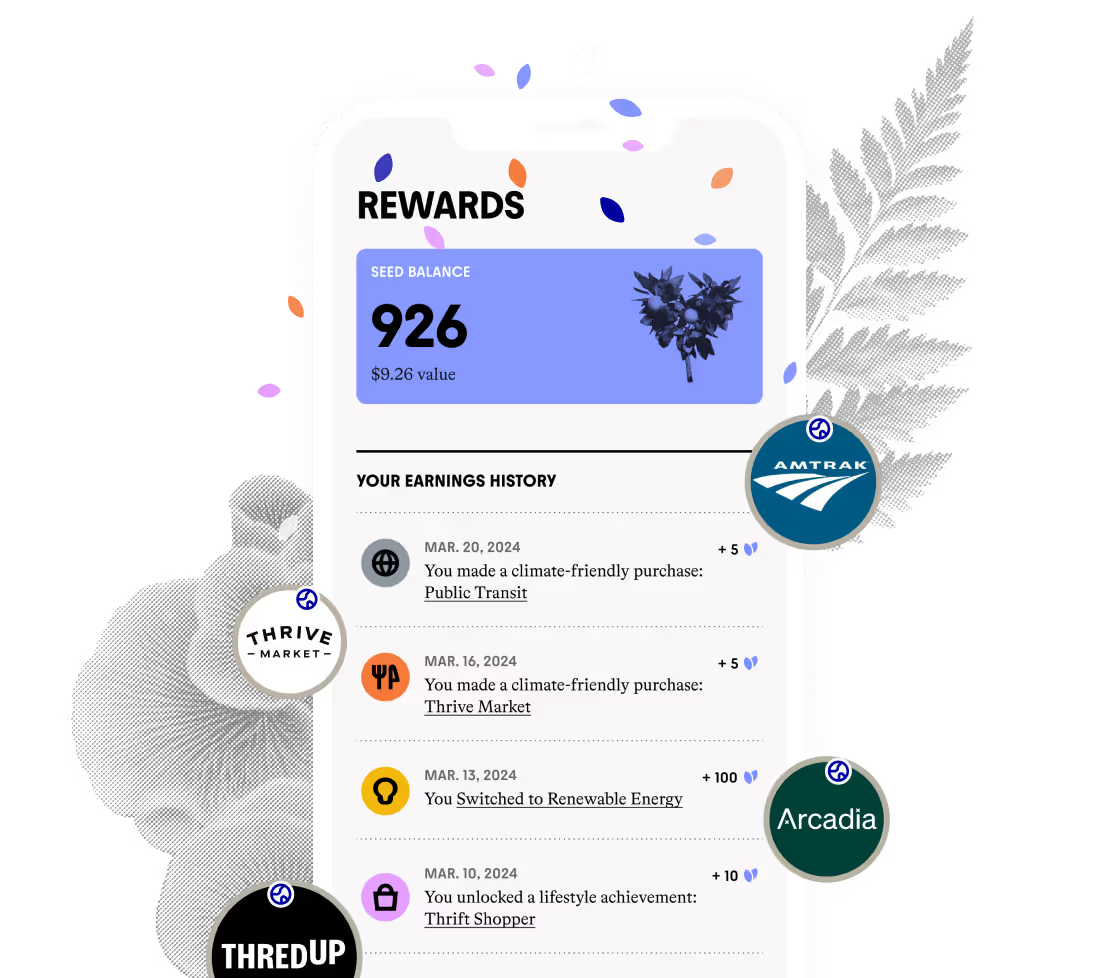
EARN REWARDS FOR SUSTAINABLE SPENDING

From thrift stores to public transit, earn rewards on thousands of climate-friendly purchases.