

What to Do Before the Next Climate Disaster
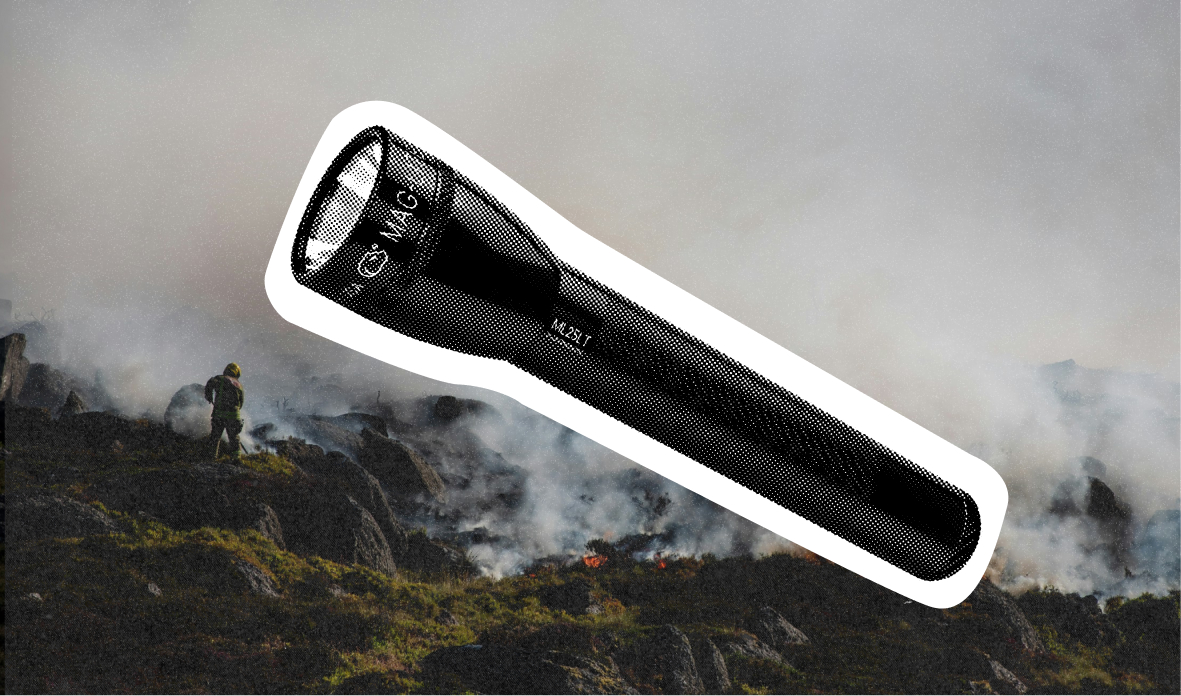
In the midst of the one-year anniversary of LA’s devastating, off-season wildfires, we’re reminded that to live in a time of drastic climate change is to prepare for the improbable. From bigger tornadoes and more severe floods to prolonged droughts and deadly heatwaves, no region is immune to the increasing intensity of natural disasters driven by climate change. The rest of the world is coming face-to-face with the brutal reality that people in the Global South have faced for years — when it comes to climate disasters, it's not a matter of if they'll hit you, but when.
But there are things we can do at home and in our communities to adapt before, during, and after disasters. On this episode, we hear from community members around the world about the climate disasters they’ve experienced and how their communities are adapting. We’re speaking with meteorologist Chase Chain about how discussing the weather means discussing climate change. And, we’re talking about how to make ourselves and our communities less vulnerable to the effects of climate disasters. And don't miss Chase Cain's on-the-ground, behind-the-scenes coverage of the LA wildfires.
Episode Credits
- Listener contributions: Airlea Rasul, Anandi Yadav, Anna , Elisabeth , Tessa Maurer, Tiffany, Zayna Zubair
- Editing and engineering: Evan Goodchild
- Hosting and production: Katelan Cunningham
Episode Transcript
Katelan (00:00):
You are listening to Second Nature, a podcast from Commons where we talk to people about how they're living sustainably In an unsustainable world,
Katelan (00:09):
Climate change will manifest as a series of disasters viewed through phones with footage that gets closer and closer to where you live until you are the one filming it.
Katelan (00:25):
That is a popular tweet, which you've probably seen if you doom scroll during a natural disaster like the floods in Washington, or the typhoon in the Philippines, or Hurricane Melissa and the Caribbean, or the wildfires where I live here in la.
Katelan (00:39):
In fact, we are in the midst of the one year anniversary of the LA Fires. Last January, months after our typical fire season, massive wildfires broke out in the Pacific Palisades on the west side of LA and in Eaton on the east side of la. What made these wildfires so shocking was that fires like this don't typically happen in such densely populated areas. Houses that stood for generations burned down in one night. I think we've all fallen victim to that. It never happens here kind of mentality, but we're finding now time and time again that we do need to prepare for the improbable. And if it seems like we're seeing more natural disasters, it's because we kind of are. We are seeing more reported natural disasters nowadays than we did in the past couple decades, and climate change is making them even more extreme. I'm sure you've lived through one, a flood, a tornado, a wildfire. Nothing can make you feel quite so helpless as a natural disaster by their very nature, their extreme, unprecedented, vast. No matter how prepared you are, you can't stop the rising temperatures of a heat wave or the roaring waters of a flood. But there are things we can do to help ourselves and our communities before, during, and after disasters.
Katelan (02:05):
Climatologist Friedrich Otto says that "Disasters occur when hazards such as climate change meet vulnerability."
Katelan (02:15):
I'm Katelan Cunningham, and today on the show we're gonna talk about how to make ourselves and our communities less vulnerable to the effects of climate disasters. We're gonna talk about how talking about the weather means, talking about climate change, and of course how we can change the climate. Here we go.
Katelan (02:40):
Even with more disasters that are amplified by climate change, we're seeing fewer deaths from them, which is great news. Science has gotten better, and so we can know more about what's coming before it comes with improvements to early warning systems and infrastructure and disaster response. More people are able to get to safety sooner. We obviously still have a long way to go, and of course, we don't just measure the scale of a disaster by the number of deaths every year. Natural disasters leave hundreds of thousands of people without homes, tens of thousands of people injured, and they cost us billions of dollars in damages. That's not even taking into account the lost wages from losing work due to disasters or long-term medical issues as a result of injuries. So when we talk about planning or preparing for a disaster, what exactly are we talking about? One of our listeners, Anna, she went to school for disaster science and emergency management, which is really lucky for us because she broke down the four phase model of emergency management,
Anna (03:47):
Disaster mitigation, disaster preparedness, disaster response, and disaster recovery. Those are internationally considered as the four comprehensive phases of emergency management.
Katelan (03:59):
We can and should think about each of these phases personally thinking about your home and your family, but we should also be thinking about them communally, thinking about our neighbors or our neighborhood and our greater community. Phase one, disaster mitigation and prevention can look like preparing your home to sustain flooding, extreme rain or winds or wildfires or whatever disasters your area is prone to. This can also include getting insurance for the most common disasters, if that's available to you. Phase two, disaster preparedness. This is all about making sure you have the information supplies and even the practice to know what to do in various emergency situations before they happen. This includes packing your go bagg, knowing evacuation routes, knowing where to go for shelter. You'll also wanna look into information on how to protect yourself from hazards, anything from downed power lines to smoke in the air, things like that.
Katelan (04:59):
Phase three response, this happens right after or in some cases during a disaster when you are seeking out or assisting in response and support. This response phase is even better if you're connected or at least aware of mutual aid and support organizations before a disaster hits. And phase four is recovery. This phase is the one that at least to me gets the least amount of coverage. It's the getting back to normal phase that depending on the scale of the disaster, can take years. For example, most of the 13,000 people who lost their homes in the LA fires, they're still in the early phases of recovery. One year later, if you need it, we have a link to a go bag list in the show notes that could be helpful for you as more and more of us are facing natural disasters all around the world. We wanted to hear from you about your experiences, how you're prepping and how you're adapting to what feels like the new normal.
Zayna (06:03):
Climate change isn't a distant threat, it's a lived reality. You know, rising sea levels, crop failure, drought, flooding, they aren't theoretical, they, they just happen. It almost feels normalized that you've just had to adapt to it, you know? So we need storytelling and policy that center lived experiences and not just emissions metrics.
Airlea (06:31):
Toronto specifically has a lot of outdated stormwater infrastructure and it failed to keep up with extreme weather events. And we saw this July 16th, 2024,
[news clip] (06:43):
As more than a month's worth of rain fell in just hours. The Dawn River swelled over its banks onto the DVP
Airlea (06:51):
Also in August of 2024, where there was a flash flood and it cost close to a billion dollars for homeowners parks and roads.
[news clip] (07:01):
Today marks seven years since the deadliest and most destructive fire in California history. The campfire killed 85 people and burned more than 153,000 acres and 18,000 structures destroying the town of paradise.
Tessa (07:16):
And it completely choked up the Bay Area. It filled it with smoke. We all had N 90 fives. You could not go outside without wearing one, and it lasted for weeks.
[news clip] (07:28):
The searing heat wave continuing then to grip Europe, as scientists say, human induced climate change is making such heat wave events more intense, more frequent, and more widespread as well. Now the situation has been notably bad as well. In Greece,
Elisabeth (07:42):
It's been almost three months. We haven't seen any rain. I really don't want to think that there will be another heat wave. We had already two and they have been unbearable during the hottest year of the planet so far. My solar panels inverter crust because of the heat and I had to buy another one, and I used my last savings to do this, and I was without electricity for two days. It has been extremely stressful and I just dunno for how long my solar panel system will be able to tolerate these temperatures.
Anna (08:17):
I live in Fargo. Fargo sits right on the Red River Valley, so we get a lot of flooding, you know, even when you're not right up next to the river, if there's low areas, it will flood.
[social media clip] (08:27):
Man, it's a flood right now, North Dakota and Fargo right now. This is crazy, bro.
Anna (08:34):
People's cars were submerged and it was scary. This is a normal amount of rain that the sewage and the drainage systems in this city should be able to handle, but they get backed up so easily because there's nowhere for the water to go. You know, I drove one of my coworkers home and I had to drop him off probably a half mile from his house because I wasn't sure that my vehicle could get through these waters.
Zayna (09:00):
One time I met a girl from Indonesia and she had spoken on this panel and she said that the floods in her county area was so vast and so severe that not only did she watch her school get wash away, she watched one of her friends drown. That was my defining moment of what climate anxiety actually is.
Anna (09:28):
You know, you don't think about natural disasters until it hits really close to home. It will cost you something, whether it's financially, whether it's your wellbeing, whether it's you have to move out of the state entirely. Whatever it costs you, it costs everyone something.
Anandi (09:41):
We see these extreme weather events happening all over the world. We see so much loss and so much damage. What more needs to happen?
Zayna (09:53):
Some examples of local climate actions in our communities include seeing a range of local initiatives from mangrove restoration projects alongside the coast to communities. We have disaster risk reduction programs in flood prone areas of the country. One amazing standard example is the Agora Project, which empowers local governance actors to prioritize resilience strategies tailored to their communities. We also have child funds, Sri Lanka, who work with children specifically outside the financial district, and they work on finding localized ways to help them find sustainable solutions, including using mangroves to help protect them during high flood seasons.
Airlea (10:44):
When we look at neighborhoods with lesser trees, you'll see an increase of dangerous heat waves. Some areas in Toronto are five to 10 degrees hotter than others due to excessive asphalt and a lack of vegetation. So without urban greening, the issue essentially worsens as climate change increases, especially when you combine all of this with highways, roads, all of these affect the way that pollutants are absorbed in the way that our urban spaces are kept cool. So we do really need the green infrastructure in our cities when it comes to green stormwater infrastructure. Rain gardens and bios, swales are a really effective way to manage urban flooding. They support biodiversity and they enhance our public spaces and save us a lot of money from different extreme weather events. Toronto currently is working toward a 40% urban canopy cover by 2050, and we have a lot of tree planting programs that open up in the summer. This is an area that's increased funding due to their cost effectiveness in cooling neighborhoods and cutting flood risks. So overall, these have been really effective at low cost.
Anna (12:02):
You truly get to the core of who you are as a community and who you are as people that need to support one another. It doesn't have to be the whole city. How does the city support one another? It's like how can neighborhoods start supporting one another because you know what makes up a city? Lots of neighborhoods, you know that we're all checking in on each other to make sure, hey, did you make it home safe? Were you able to start your car? Do you need a ride home off the side of the street because your car stopped that? You're not in this siloed mindset where it's like, well, every man for himself. And so when you think on that smaller scale, there is greater things that can be done on a larger scale.
Katelan (12:44):
When a climate disaster hits, what is one of the first sources of information that you rely on? It's probably a meteorologist. Meteorologists are experts in the weather. They're here for the hottest summers, the coldest winters, and every day in between. And with climate change making natural disasters even worse, we are relying on them more and more. Chase Cain is a meteorologist at NBC News and the host of the podcast Predictable, where he explores how we forecast the weather and how climate change is impacting those predictions. So I was very excited to talk to him about how exactly climate change affects natural disasters, his on the ground experience reporting on the LA fires, and how he broaches the topic of climate change in his reporting. Hi Chase, thanks for coming on the show.
Chase Cain (13:38):
Hi, Katelan, of course, great to be here as someone who listens to the podcast. It's so fun to actually be on the podcast with you.
Katelan (13:45):
Yay. Yay, yay. We're so excited to have you and I'm so excited you already listen, you are a meteorologist here in LA where I live as well. You witnessed and reported on the January wildfires, which literally hit close to home for you. I wondered if you had ever covered something quite like that before.
Chase Cain (14:05):
No is the short answer and no, for several reasons. One, I go cover disasters, I go cover difficult things often, but it's going, I'm going somewhere else, even if it's just to a different part of California. If it's to a different part of the country, like I'm going somewhere else. And so I get to come home to my home that's safe. And the biggest thing personally was that the wildfires in LA a year ago now it's been a year, really shattered this illusion that like my home is safe, that you also live like in the city. And we think about wildfires wild, it's out there. There's not a fire burning in San Francisco. There's not a fire burning in San Diego. It's like out somewhere. But this was in the city of Los Angeles. And so it shattered the, honestly, the ignorance that I had even as a meteorologist, even as a climate journalist, it shattered that illusion of safety.
Chase Cain (15:02):
The other thing, like from the weather perspective that really got me was I, I said this on tv, I also said this in a YouTube video that I published about what it was like to cover these fires. It was like covering a wildfire inside a hurricane and like a cold hurricane because you had the fire, you had the ash, you had the smoke, you had winds which were gusting well into like category three four, I'm forgetting the exact number, but like it was like wind gusts of like category three or four hurricane strength. And then it's also dry air and it was cold at points. So like I have layers on, I'm being blasted by wind and there's a fire. It kind of felt apocalyptic, just to be candid. Yeah, it was incredibly difficult for so many reasons. And you know, not to minimize the fact that so many people lost their homes. Yeah, people lost their homes, people lost their lives. Like that's always the part that's really just difficult as a human being to see that happen.
Katelan (15:56):
Yeah, truly. I always told my mom in past wildfire, she would call me if there was a wildfire and I'd be like, look, you don't have to worry until you see the Hollywood sign burning. So when the fire broke out at Runyon Cannon, I was like, oh, that's for context for people listening. That's kind of like right below the Hollywood sign, right? Mm-Hmm <affirmative> And so I was like, oh man, this is really, really, really real now here in the, in the dense part of the city, like you said, where we don't normally experience those kinds of things.
Chase Cain (16:23):
Yeah. And and you know, Caitlyn, I actually have said the same thing I've said to my family before. I'm like, they're wildfires. Like even if it says Los Angeles County, Los Angeles County is as big as some states, like it's not right at my home. But it was that second day, I think it was January 8th, it was that second day that I'd been covering the fires and I had slept, you know, maybe two hours and I had just gotten home showered like twice. <Laugh> finally like eating food. I'm just exhausted. And of course like I have NBC on TV and I am watching my colleague talking about like, this is news we don't wanna report. There's a fire next to Runa Canyon, they're calling it the Sunset Fire. And I immediately just like went to the back door and I could see flames through the window of my home and I'm like, oh no, what do I pack? I cover people evacuating and I've never thought about what if I have to evacuate and I'm just like throwing things in bags and it didn't make sense again that like that illusion was shattered. And I think the reality check for everyone is like there is nowhere that's like really safe. And that's the urgency part. That's the scary part of all this is that there really isn't anywhere that's immune and both of us live that. I'm so glad that you are. Okay. And that your home's okay also.
Katelan (17:34):
Yeah, a lot of our listeners have brought up this concern about preparing themselves and their families. We had someone named Tiffany in Kansas City and she said,
Speaker 15 (17:44):
I live in the Midwest, United States of America and though we have an abundance of resources, very, very few organizations are actively preparing for how climate change will eventually impact us here. What can I do as a citizen to get the powers that be to be proactive in preparation?
Katelan (18:02):
So I felt like that was a really sort of nice question to bring to you how to think about getting prepared, especially in places that aren't used to needing to be prepared for disasters as sort of climate change spreads and creates disasters in places that may be unfamiliar with it.
Chase Cain (18:18):
Yeah, that's a great question. Because you know, so many people face this that like this is something they're already concerned about, they're passionate about, they want to do something. And something that I say often is like, vote, get involved in your local government. And immediately a lot of people are gonna be like, oh my gosh, you were telling me to go to a city council meeting <laugh>. And I get it. They're not exactly like, they're not always interesting, but they're important. Going to the doctor for a physical may not be interesting, it may not be fun, but like that's our health, right? Like it's important that we take care of our bodies. It's important that we engage with the people who are making the decisions that impact our lives the most. We get caught up on president and Senate and Congress and this party and that party.
Chase Cain (19:01):
The people that impact our lives the most are in our city council or our state legislators. And I'm not saying you need to drive to your state capitol, but like go to a city council meeting and if you wanna bring something to them, the piece of advice that I would have is like, don't go in there is like my first time at a city council member and I'm gonna go up to the microphone and I'm gonna yell at them. I don't think there's a way to go about it. Like if you show up more than once and you bring it to them in a thoughtful way of like, hey, okay, maybe it's a particular political orientation that doesn't want to talk about climate change. You don't have to say climate change. You could be like, Hey, you know, energy prices are getting higher, right? In our community and I would love to address this.
Chase Cain (19:43):
You know, I know that wind and solar are the cheapest sources of electricity by far. Let's talk about this as an affordability issue. And you don't have to say the C word if you feel like that's not gonna go over well. You don't have to go in and attack them, just have a conversation. Because ultimately I hope that those people are the city council, like care about their community, right? They're like, oh yeah, my power bill's expensive. I care about the people in my community. How can we make this more affordable? Or what are we gonna do about the fact that my kid's school is flooding? If you find that common ground first and have a conversation, right? You're having a conversation with your neighbors, which is so different than thinking about the president or who's in Congress. Like these people in your city council are your neighbors. Like you already have a lot in common. And so start from that place of commonality.
Katelan (20:30):
Yeah. This actually brings me to another question I had for you. I noticed that on your podcast Predictable, you had Arnold Schwarzenegger on and he talked a lot
Chase Cain (20:38):
About the The governator. Yes.
Katelan (20:40):
You had the governator on and he talked a lot about climate change and he was advocating for not saying climate change quite as much, saying like pollution and cheaper energy. And since it's your job to communicate about the weather and you've made it your mission as well to talk about communicate about climate change, I wondered like what's your take on this? How do you communicate urgency and have you had to adjust your language to do that? To kind of like break through to people?
Chase Cain (21:07):
That's a great question, Caitlyn. I think he's right on a lot of levels. Whoever said talk is cheap. Like, I don't know, take it back because like words are important and words are powerful. I think he said this like, who likes air pollution? No one's gonna raise their hand. I think the executive of fossil fuel company is not gonna raise their hand and say, I like air pollution. And so when you talk about it in a term that like really does impact everyone, then you can go farther in the conversation. Because ultimately burning oil and gas creates air pollution. There's no such thing as clean coal. There are things that you can do to make the pollution less, but you can't burn oil, coal and gas and not have air pollution. It's just not possible. But if you put up a solar panel or a wind farm, there's no air pollution, right?
Chase Cain (21:53):
And it's cheaper too. It's a lot cheaper. And your other question about like, have I changed the way I talk about it? I have almost like an informal internal lab of I just experiment with things. I'm always reporting facts. We're sticking to the truth, we're sticking to the facts, but you can present the truth with different words and if something resonates then I might try that again. Or if I don't get the angry comments that if I, you know, talk about air pollution and not about carbon emissions from burning oil, like okay, you like carbon emissions, like what are carbon emissions? Like most people are like, you've lost them already. So I think that kind comes back to this point of like, yeah, like the words that we choose can make a big difference.
Katelan (22:37):
I thought you'd be the perfect person to kind of ask this question. So going back to the fires for a second, climate change doesn't start the wildfires, but it makes them more likely, it makes them more intense. Mm-Hmm <affirmative>. And it's sort of brought up for me the fact that like a lot of the things that climate change amplifies are sort of opposites and so they can be hard to grasp. So you're sort of like, okay, on one place it's making droughts worse, but in the other place we're having like sudden catastrophic rainfall. Or like in this place the cold is getting colder and the hot is getting hotter. How do you explain to an average Joe or me <laugh>, how do you explain to me how climate change can do all of these things that seem like they're complete opposites?
Chase Cain (23:15):
That is something I'm constantly working on. I try to keep it simple, but because it can be complicated. Yeah. It opens the door for people who want to deceive you to lie to you and say like, oh, we've always had heat waves. What do you mean it's summertime, it's supposed to be hot. Look at all this snow outside. Climate change isn't real. I mean, there was a member of Congress many years ago who brought a snowball onto the floor of Congress and tried to make that point like people have tried to use the weather to disprove climate. But climate, first of all, if you don't know the difference, climate is just the average of weather over a long period of time. So outside where I am right now, it's cold and it's snowy. It's probably warm and sunny and my home in Los Angeles where you are, that's weather.
Chase Cain (23:58):
And if it's warm and sunny every day over the course of a month or three months, that's climate. So it's just the long term. The thing that climate change does is it basically takes the rules and warps them. It takes the extremes and pushes them out. So one way to think of it is like, let's say you're an avid gardener and you have, I don't know, you have an acre in your backyard and it's just all garden. You grow tomatoes and lettuce and whatever you love mm-hmm <affirmative>. And you know that over the course of a year you're gonna get 20 inches of rainfall. And you know that like, okay, I'm gonna get this rain and I plant this at this time of year in sure climate change and you're still getting 20 inches of rain, but it's not spread out over the year anymore. It's once in this scenario you have 364 days of no rain and then you get one day where you get 20 inches of rain.
Chase Cain (24:49):
What is that gonna do to your garden? Right? The garden's dead. It probably didn't survive the drought and if it did, well now it's on your water because it just got 20 inches of rain in one day. This is obviously like a hypothetical example, but that's how climate change works. It takes the norms and the averages and warps them. So maybe you're still getting the snow that you got, maybe you're still getting the heat that you got in the summer. But if it's all coming at once, if it's really hot on this certain day, if it's really dry for a much longer period of time, that's what climate change does. And so that's what makes it in some senses a little harder to see because normal things are still happening, they're just not happening in the normal way or at the normal time. Give, give me a grade. That's great. How was that explanation? That's
Katelan (25:29):
Great. A plus. Love
Chase Cain (25:30):
It. Okay, great.
Katelan (25:32):
It makes me think too, like I've talked in the past with journalist Emily Atkin on the show and she sort of talked about how like you sort of reach a point in journalism where a lot of the things you're reporting on it becomes irresponsible to not talk about climate change. And I feel like meteorology is probably the first place, <laugh> the first section of journalism that that you can't ignore it. And I kind of wondered like in the time that you've been a meteorologist and a reporter, how have you seen the conversation about climate change change on TV for the everyday viewer?
Chase Cain (26:03):
It, it goes through waves. Like so many things do. I mean, I would say a few years ago there was probably like really great momentum where so many meteorologists, like local and national, we're talking about this all the time. Now it seems like, and I think there's some data to, to back this up, it seems like we're in a period where people are more afraid to say the C word. That climate has become a four letter word for many people and you're hearing them use the word less. If you're really tuned into this, you might notice that the meteorologists are still talking about climate change. They're just talking about it in a different way, way. But you know, it's, it's unfortunate that there is this perception that climate is a four-letter word, that we can't talk about it, that we're gonna lose viewers, that we're gonna get angry emails.
Chase Cain (26:55):
But actually a really wonderful guest who you had on an earlier episode of this Dr. Ayana, Elizabeth Johnson, mentioned this perception gap in that we perceive that there are a lot of climate deniers out there, but the data shows there actually aren't. Tony Litz at Yale, who also does a lot of great research on this, calls it climate silence, that because we think there's a lot of people who are climate deniers. Well, I don't wanna get in an argument or I don't know if I have all my facts right? So I'm just not gonna bring up climate 'cause I don't wanna get in an argument with someone who's a climate denni. And so we censor ourselves and create this climate silence unnecessarily because the reality is most people are on board with this. Three fourths of Americans are like, yeah, I get it. Climate change is real. Yeah. Only like one in 10 are actually those climate deniers. And there's a little group in the middle where it's like, well I don't know, I'm not sure. But you can also still work with, I don't know, I'm not sure. So if only one outta 10 people are actually these really loud climate deniers, then why are we censoring ourselves for the other nine outta 10 people? Like why are we doing that? Yeah.
Katelan (28:00):
Yeah. And I think it kind of goes back to what you were saying with the common ground thing. Like that can sort of be your way in. Like maybe you live on the block with a climate deni, but you do live on the same block, so you all experienced whatever it is, the ash from the fires or you all experienced the flooding, you know, these opportunities to see like, okay, where can we sort of back into it a little bit
Chase Cain (28:19):
The way that you said that about like you live on a block of the climate deni. I was thinking about when I was covering Hurricane Milton in Florida, I guess it was 2024, so a year and a half ago or so now, the hurricane had made landfall on the Gulf Coast of Florida. I was in Daytona Beach on the Atlantic Coast and it was still like a category one or two tons of flooding in Daytona Beach. And I'm interviewing this person whose neighborhood was under like, I think a couple, two or three feet of water. And she was very clear, like she understood that this was climate change. And then a couple doors down, I'm talking to her neighbor that's like, nah, climate change is the hoax. What are you talking about? And I'm like, okay. I was like, that's fine. How, how long have you lived here?
Chase Cain (28:56):
I've lived here my whole life. Oh, okay. Well like when has it been this bad? Well, this is the worst it's ever been. When was maybe the worst time before that? Oh, well the only other flood that was even close to this was like a year or two earlier when this other hurricane come through. Okay, well how about before that? Right? I know I can't, I can't think of anything. And so all of a sudden I haven't tried to like disprove them, but you're just like kind of walking him down the path of the obvious. I mean I could see the look on her face where she's sort of like, oh, you know, you can almost like see the like a little bit of embarrassment right? But also like the light bulb go off. Yeah. And I'm not like, I'm not there to make someone feel bad or shame someone.
Chase Cain (29:34):
I don't think that's the way that we get at this. But I do think there are ways that you can ask people questions, listen and you know, kind of like they say you, you can't make the horse drink, but you can lead the horse to water what, I dunno what they're saying, right? Something like that. You can lead a horse water, but you can't make 'em drink. But like, you know, you can kind of like politely and gently like lead the horse to water and then be like, all right, there's the ponds. See you later. <Laugh>. Yeah,
Katelan (29:56):
Here it is. And I mean it doesn't help that our own EPA, I think it was just this week they removed the mentions of manmade, well let me see. Lemme check my notes.
Chase Cain (30:07):
Oh gosh. Yeah. So, so December. Yeah. Yeah. So like in, in December people are listening to this, probably in 2026 in December they removed the reference of the cause of climate change. The first thing they list changes in the earth's orbit and its access of rotation have had a big impact on climate in the past. I mean, okay, that's <laugh> that that's true. But like, even without like taking the time to read through all this, at first I'm just like, oh my gosh, they're really claiming that like earth's orbit and rotation is causing this. But then the more I thought about it, I was like, this is actually an opportunity that I think, and I think you could say like they're getting so desperate to hide the overwhelming truth that now they're grasping. So if it's Earth's orbit and rotation, I don't know, can we get like all 8 billion people on the planet to like do a Guinness Book of Worlds records thing and like go to the same continent at the same time and we can tilt earth back and we can solve climate change.
Chase Cain (31:03):
Yeah. Like you're smiling at me 'cause you're like, that's absurd and that's hilarious. But that's kind of like where we're at is that like they're now getting to the absurd, which I actually think this is the optimist underneath. I think that's a sign that like the overall momentum is there. Yeah. The bad stuff is undeniable. Like the disasters and the impacts and the deaths and like all of the awful things undeniable. But the momentum is also undeniable. Even if the United States were to unplug every solar panel and wind farm, which by the way would be a terrible idea 'cause we'd have blackouts. But like even if we did that, guess what every other country on the planet is doing. Guess who is like winning the gold medal and building wind and soul China? You know, we talk about wanting to like be a competitive country in America first. I can't think of a better way to make America first than having us be truly energy independent by wind and solar. Yeah.
Chase Cain (31:59):
There were certainly so many things in 2025, like rollbacks, envi mm-hmm <affirmative>. And essentially taxing the environment that happened from the administration of Washington. Like that's not opinion, that's fact. Like they have done a lot to degrade our environment, our world and remove protections for it. Like back to that question from a viewer, go to your city council meeting. That's not the sexiest thing to do. Right? Like, I'm not gonna claim that going to your city council meeting is gonna be like the most fun thing you ever do, but gosh, it's important and that is a place where you can have an impact. And then yeah, you show up to a meeting and you get your friend to come with you, you get people in your neighborhood to go with you and then all of a sudden it's gonna get real hard for that city council to ignore you. These are your neighbors and that's where you can make a difference. I don't wake up in the morning and check the EPAs website while I brush my teeth. I don't know if you do, like maybe you're doing great, good for you. I don't, you know, I don't do that.
Katelan (32:52):
There's like the running joke that the weather is kind of the most innocuous, mundane thing that you can talk about
Chase Cain (32:57):
With somebody. It used to be. It used to be. Yes. Those were the days <laugh>.
Katelan (33:02):
No, those were the days where it was like a joke that that's you're like, well at least we can, I could talk about this and not offend anybody. And the thing that I keep coming back to, which actually a listener brought up in season one, how during the COVID pandemic lockdown, we saw a decrease in carbon dioxide and methane in the atmosphere. And that is so wild to me because like the thing with weather is it seems unchangeable whether or not you believe in climate change or not, it feels like, okay, I, I'll stop driving my car, I'll stop doing this, but I'm not gonna see the results of this thing till long after I'm gone. But the idea that during the COVID lockdown, and I know that's a very extreme example, right? Where we had like most of the earth, most of the people on earth stopped driving, stopped flying, and then we saw the decrease in these things. But it's just a reminder to me that like the things that we do actually do matter. And when we start doing better things, we can see changes like relatively quickly considering how many people are on earth and how big the earth is. I think it's a relatively quick turnaround if we just stuck with it.
Chase Cain (33:58):
Yeah. And I, I, I'm, I actually like that example because there's I think an important distinction between you don't need to stop driving your car. I know a number of people who drive gas powered cars and they feel guilty about it. Mm-Hmm. They're like, I don't mm-hmm. Have an ev and I feel guilty. Why did you create the system of gas powered cars in the United States? No, and if you can't afford an EV that doesn't make you a bad person. That doesn't mean that you need to stop driving. That doesn't mean that you need to stop living your life. But what the COVID lockdown did, I don't think it's a sign of like stop flying, stop driving. I think it's a sign of like, this is what happens when we change the system. Exactly. That it's not exactly what kind of car Kaitlyn goes to get into.
Chase Cain (34:41):
It's how do we change what kind of car everyone gets into because then we have those benefits. So it's not about you being a bad person and you needing to shoulder this by yourself. It is a sign of here's what's possible when we change the system. And I think that should be a really motivating thing of like, man, if everyone was driving an ev you know, commercial air travel, not something we can currently decarbonize. There's a lot of interesting solutions on the way, but like, yeah, we get to a point where like every car's electric, every truck's, electric planes are electric or powered by hydrogen or whatever it is that ends up being, that's what's possible. So it was kind of a cool like coming attraction of like the future that we want.
Katelan (35:23):
I love that framing. I think that's a perfect note to end on.
Chase Cain (35:28):
I appreciate you having me on and you know, I just, one of the things I will acknowledge quickly before we wrap up is like in this podcast, you do a great job of bringing in like viewer questions or just like comments or thoughts. Like hearing these different voices is always like a reminder to me of like, I'm not doing this alone. I'm not the only one that feels like this. There's so many people that feel the same way that we do. And, and I think that's just an important reminder. So when people listen to these podcasts, like hear all these different voices from different places with different dialects and they all are motivated by the same thing as you, and to let that energize you.
Katelan (36:02):
Yay. Thank you so, so much. That's what we set out to do. So that means a lot. Thank you for coming on.
Chase Cain (36:06):
Of course. Thanks Caitlin.
Katelan (36:15):
The perfect time to prep for a disaster is on a blue sky, sunny day, or at least on a day. When you're not actively experiencing some big weather event. Think about the disasters that you experience in your area and start at home with the four phases, prevention, preparedness, response, and recovery. Then after you've put on your own oxygen mask, so to speak, go out into your community, think about how you can help your neighbors prevent damage and prepare themselves. This includes our unhoused neighbors too. Don't forget them. How can you advocate for prevention and preparedness measures in your city? And what mutual aid groups or nonprofits can you get involved with and support right now so that they're better prepared and equipped when disaster hits? And how can you continue to support others on their rocky road of recovery after a disaster? This is not easy stuff to talk about. It's not easy to think back on hard times. So we're ever grateful to our community for sharing their firsthand experiences. Today you heard from.
New Speaker (37:21):
[Credits]
Katelan (37:38):
Stick around for one more minute to hear how you can get involved in community climate efforts near you. But first I have to tell you that this episode was edited and engineered by Evan Goodchild. It was written and produced by me, Katelan Cunningham. Thanks so much for listening and we'll catch you back here next time. Stay safe.
Leena (38:00):
My name is Leena Joshi and I'm the founder and executive director of Climate Conservancy. Climate Conservancy is an international youth-led nonprofit for climate conservation and education dedicated to the intersectionality of art and science of environmental stewardship. Guided by a belief in the power of art, education, intersectionality, and creative expression. We unite over 9,000 volunteers in more than 70 countries through art in all its forms, rigorous scientific inquiry and policy engagement. We equip youth to shape equitable climate solutions, advance conservation, and preserve the world's most irreplaceable landscapes for generations to come.
Ellina (38:54):
Hi everyone. My name is Ellina and I'm involved with the Taps Run Dry Initiative by Ally Consulting and the Dreaming Collaborative in Santa Clara County, serving 15 Bay area cities in California. Our mission is to highlight the impact of hyperscale data centers, which is used for generative ai, specifically on aquifer health and assist municipal leadership and everyday folks in their efforts to understand and protect their local drinking water. We are building a Bay Area coalition to track hyperscale data center development and share with folks how they can directly advocate in the process through civic action when it comes to protecting their community from maleficent developments that threaten public health. You can join us@tapsrundry.com. Thank you.


.jpg)