


I Digitized My Wardrobe and It Revolutionized How I Shop

.svg)
.svg)

Join the community



You know the feeling when you’ve spent hours digging through the thrift shop racks and finally pull out a piece that’s tailor-made to your taste?
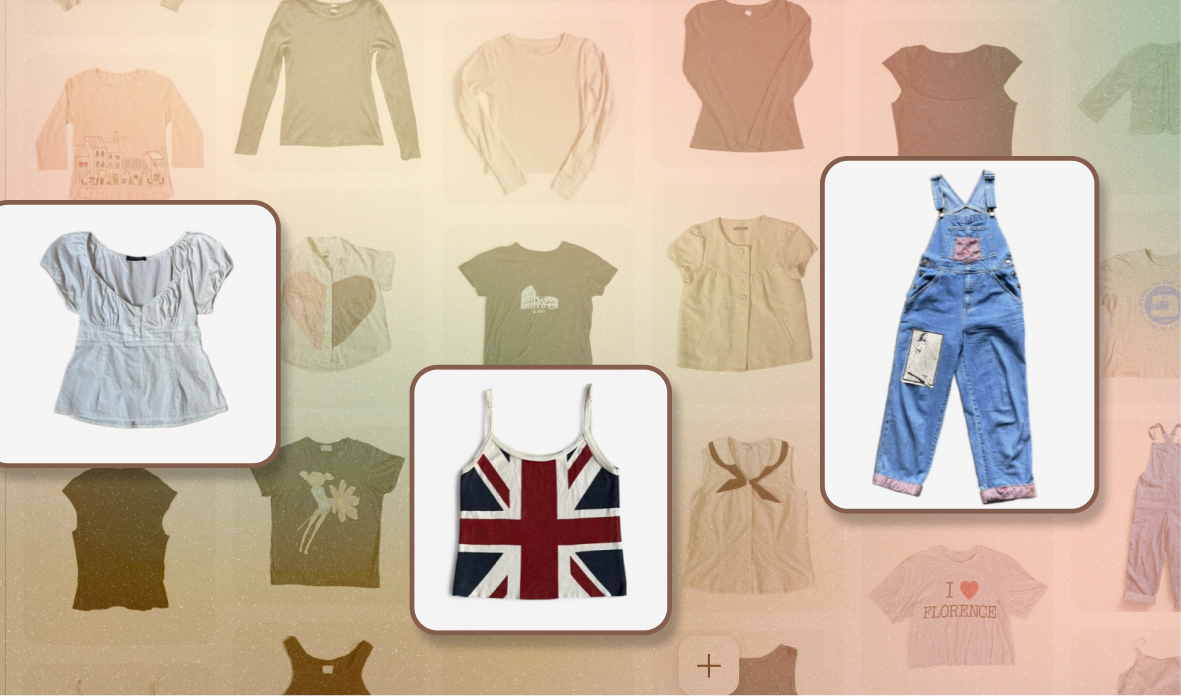
Imagine how you’d feel if the price tag read $0, and there were racks and racks of more free pieces that were perfect for you. That’s how I feel when I scroll through the Pinterest board I made of my closet.
Prior to starting this project, I had begun to notice a trend. Clothes became more desirable as soon as I listed them for sale on Depop: posed, with good lighting and a price tag. I started imagining myself wearing old items to new parties, trips to foreign cities, and working on location at a dream job.
It made me realize part of the reason I found shopping so addictive was being able to see everything spread out and styled. It’s almost like clothing that wasn’t mine seemed to have more potential. There’s the opportunity for a blouse to change who I am as a person, if only I buy it and see. Then, once this fabric changes me, I must upgrade everything else in my life to match it. This sends me deeper into the overspending spiral. It’s a phenomenon coined the Diderot Effect.
Unfortunately, with the ever-increasing speed of current trends, we’ve found ourselves buying and buying until we’re buried in a confusing maze of things that are no longer in vogue, or, now that we’re looking at them again, not even resonant with ourselves at all. Why did I buy kitten heels when I’m hiking in the woods more often than not? Then, a new “must-have” item drops, and the cycle begins again.
It’s not good for our wellbeing, our planet, or our budgets.
So I thought: If I catalog my entire wardrobe on a Pinterest board, maybe I could finally develop a solid sense of style and be able to buy less and buy better. On its surface, making my closet into a Pinterest board may not seem like a huge act of resistance against social-media-driven hyper-speed microtrends… but it has been for me. Maybe it could be for you, too.
Here’s How I Did It
- Taking photos: I took everything out of my closet bit by bit, laid the items in good lighting, snapped pictures, and hung them back up. I felt less intimidated if I went in phases, taking pictures of one section of clothing (i.e. just winter coats) and then having a break. For reference, I have 137 pieces, including everything from shoes to clothes to accessories. This took me four hours and was definitely the hardest part of the whole process.
- Editing the photos: I spent two hours uploading my items to Depop to use the free background changer – everything on plain white, please! – and screenshotted the pictures from there without listing anything. There are other bulk tools that are probably much easier. I’ve heard good things about Canva and Picsart, which require a paid subscription, and Adobe, which has a free background remover that you can use without an account! Figma also has a background remover.
- Putting the photos on my Pinterest: It took me about 1.5 hours to get everything uploaded to my “Closet” Pinterest board. This is easiest to do on a computer.
At pinterest.com, you can bulk upload images to create pins. After you’re logged in, just tap the plus icon in the left bar. Then, select Pin and drag in your photos — all at once or in phases.
If you’re adding the photos via the Pinterest app like I did, start on the homepage, click “Profile,” Then tap the plus sign in the top right. From there, click “Pin,” then upload one picture from your camera roll, click “Next,” and upload it to your desired board. It doesn’t matter what order you upload, since you can move everything around later! - Organizing my pins: I have one board for my entire wardrobe, and divided the clothing categories into “Sections” inside it. It took me about thirty minutes to drag photos around and sort them into sections. I have the pins going from outerwear, sweaters, long sleeves / tees, tank tops / dresses, down into shorts, overalls, and pants. In different sections at the top, I have categories ranging from shoes to accessories!
All in, the whole process took eight hours. I was able to comfortably spread these tasks out over one weekend about five years ago.
When I get rid of items, I delete them from my Pinterest closet. When I get anything new, it takes me less than five minutes to upload each item. AND, if I ever mend or alter a piece, I take a new picture to upload, and it offers the same dopamine rush as buying something new!
I can’t even begin to imagine how much money setting up this board has saved me. The average American purchases 53 new pieces of clothing a year. I now bring in less than 20, which definitely isn’t perfect! But it’s better.
Here’s a picture of my closet in person:
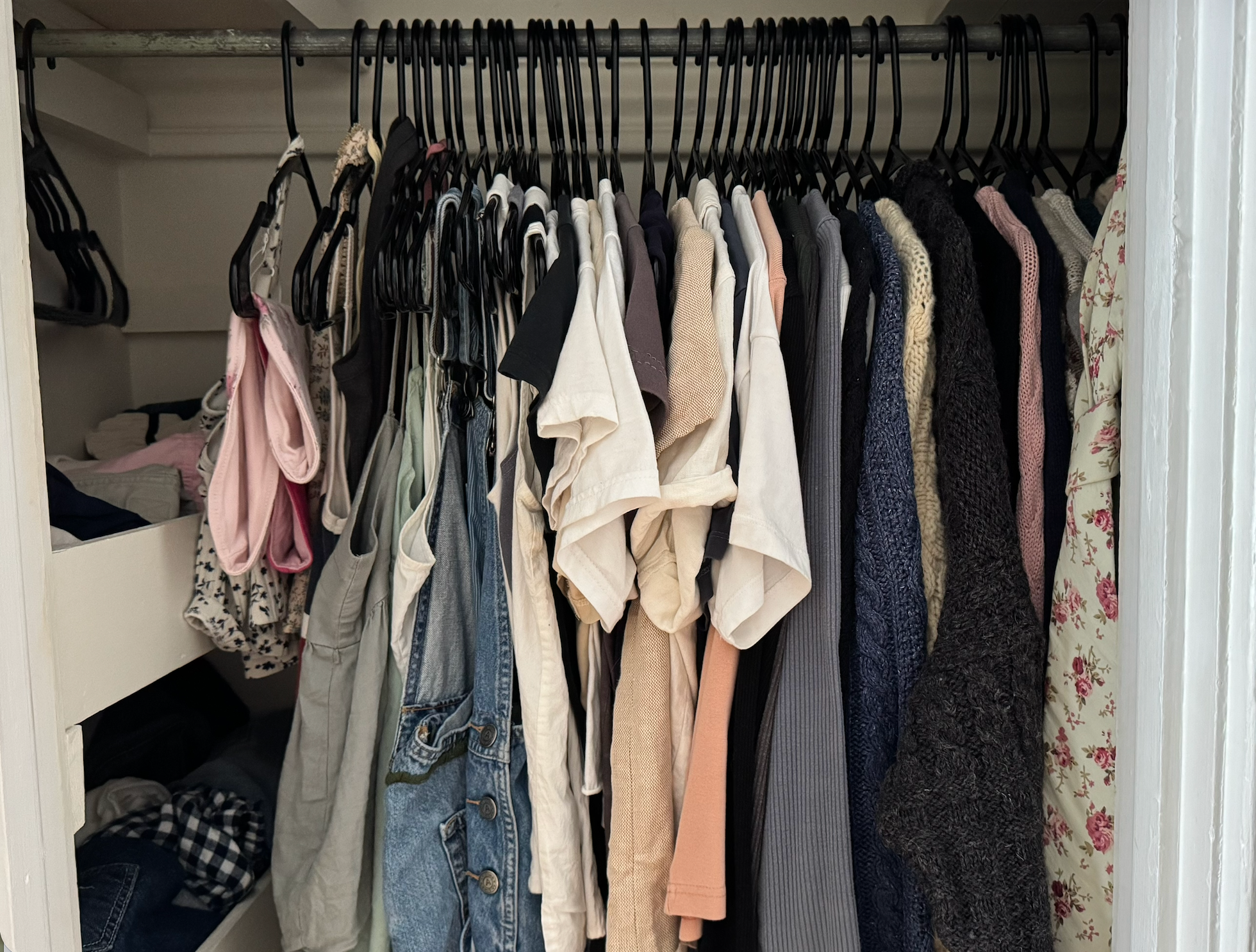
It’s pretty small, with 1/4 of the clothes hiding out of sight, extending past where the doorway ends. Items are on the shelves along the left side or tucked into my dresser across the room.
Here’s a snapshot of my digital closet:
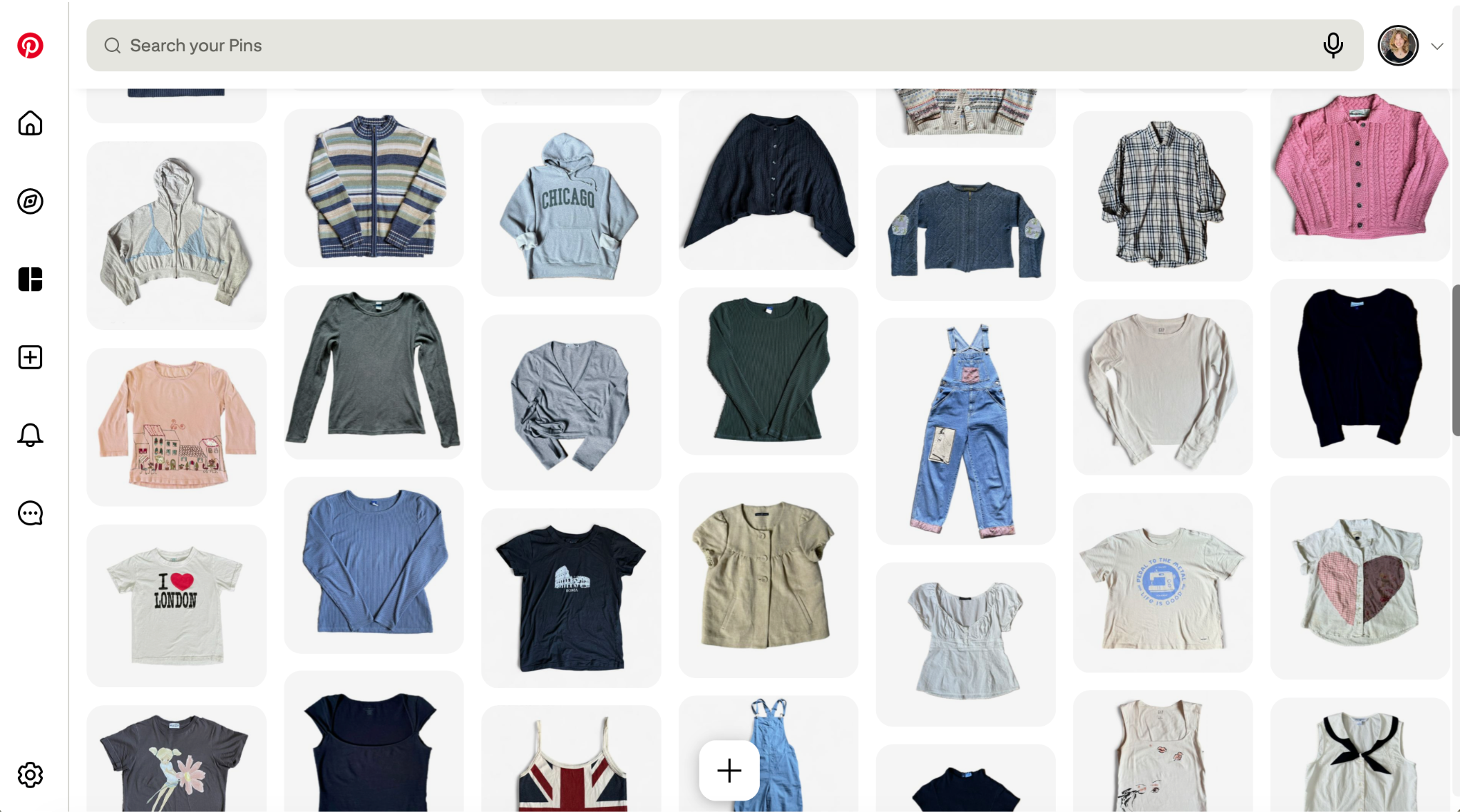
It’s so much easier to pick outfits out when everything is laid out at your fingertips – Cher from Clueless was onto something! Looking at my closet in person, items meld together into a blob of color, which used to make me simultaneously feel like I was drowning AND like I had nothing to wear.
I made this board by hand before there were any good tools to help me out. Lucky for you all, this isn’t the case anymore! I’ve found that Indyx is a really great tool for digitizing your wardrobe, and it even factors in the cost-per-wear of each item you own based on how much use they get. Whering and Stylebook are also solid options in the same vein.
How Cataloging My Wardrobe Changed The Way I Shop
I used to go out shopping with a general idea in my head of what I wanted, no specifics. Sometimes I would even go out with no plan at all, just picking whatever made me happiest in the moment, but that happiness often faded fast, causing me to end up with an impulse purchase that made me feel worse in the end.
Now that I can open up my closet on my phone wherever I am, I can stay truer to myself. I have an understanding of what I historically reach for, what makes me comfortable, and the kind of lifestyle I lead — all notions that used to disappear as soon as I crossed the threshold of a store, physical or digital.
You owe it to yourself and the planet to see that the clothes you already own are more sustainable than anything you could ever buy new. This whole project has helped me understand that the items I’ve had for years are good because they’re mine. It can be a form of self-love to allow the signs of use from the unique and beautiful life you lead to show on your fabrics, and love them all the more for it.


%202.svg)
.jpg)

.png)
