


War Has Always Been a Climate Issue
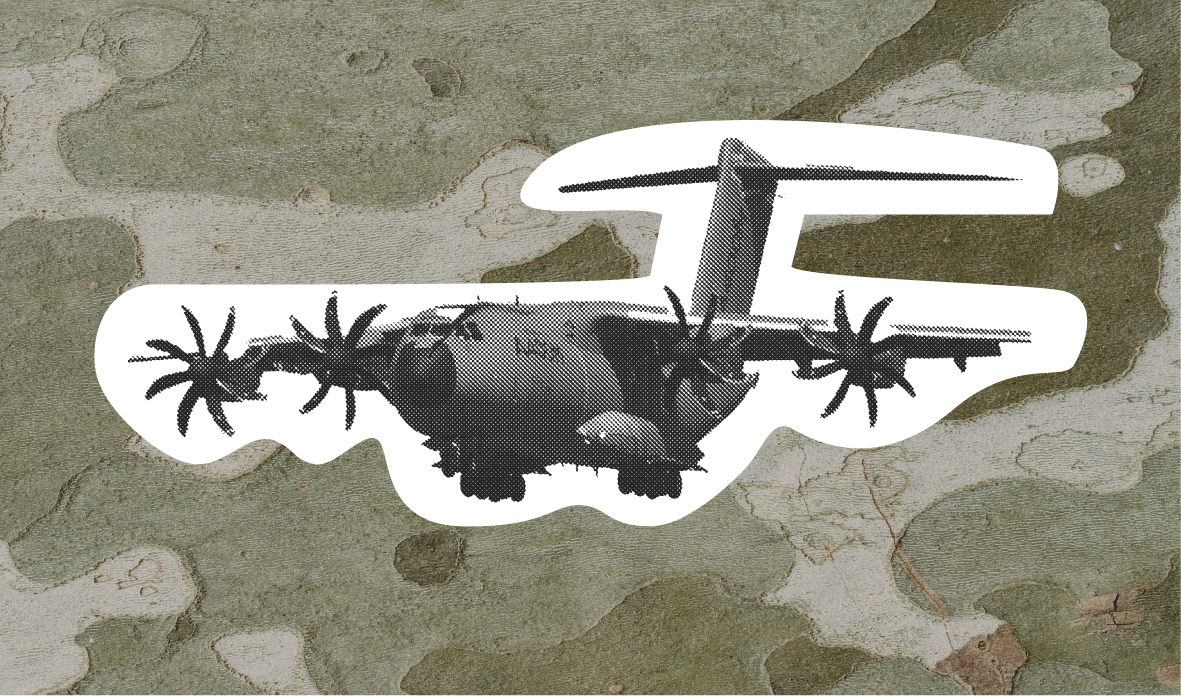
Your workout leggings, your morning commute, and the fertilizer to grow your food — what do they have in common? They're all fossil fuel legacies of war. In this episode, we connect the dots between the military and the climate crisis, tracing how wartime decisions made decades ago still shape and pollute our everyday lives.
We sit down with Neta C. Crawford, professor of international relations at the University of St. Andrews and author of The Pentagon, Climate Change, and War, to unpack a staggering blind spot in our global emissions picture: the military. We also follow the money with Commons co-founder Sanchali Pal to understand how the U.S. kept military missions out of the Kyoto Protocol, and what that means for climate targets today. We also hear how our community feels about using their money to avoid funding wars they don't support.
Episode Credits
- Listener contributions: Braden Marazzo-Nowicki, Diana Holguin, Drew, Julia Nolasco, Fionaa Bhatia, Nicole Collins
- Research: Makenna McBrierty
- Editing and engineering: Evan Goodchild
- Hosting and production: Katelan Cunningham
Episode Transcript
Katelan Cunningham (00:00):
You are listening to Second Nature, a podcast from Commons. If you want to find ways to make your money really count for yourself and the planet, the Commons app is it. And on this podcast, we talk to people about how they're living sustainably in an unsustainable world.
Katelan Cunningham (00:22):
Question for you. What do plastics, synthetic fertilizers and freeways have in common? These are not just fossil fuel laden cornerstones of modern life. They're also very, very long threads tracing back to wartime decisions from militaries to wars to industries built to support the wars. A lot of money and a lot of emissions are tied up in our wars. Of course, that's not to mention the staggering, devastating effects that wars have in the lives of people living in conflict zones and beyond. I'm your host, Katelan Cunningham, and today on the show, we're gonna start connecting the dots between our reliance on fossil fuels and our involvement in wars. We're going to trace back what we know and don't know about decades of military emissions, and we're going to reckon with how our dollars and our votes contribute to all of it. Let's get into it.
Katelan Cunningham (01:31):
The climate crisis is the most imminent, widespread threat in the world, and it's a threat that we can still tackle. Yet so many countries are still spending way more money defending against foreign enemies than on adapting and mitigating the impacts of climate change. Partially, maybe because in the case of the climate crisis, we humans are the enemy, mostly the humans living in the global north. And that is a hard fact to reckon with when the only way to flip our enemy status is to completely change core aspects of our society, especially how we think about money. One big category of spending here in the US is the military. The US spends more on its military than any country in the world, and it's racking up a ton of emissions in the process. Well, billions of tons. Actually. The DOD, that's the Department of Defense emitted an estimated 1.2 billion metric tons of greenhouse gases between 2001 and 2017 alone. The US military is the largest institutional consumer of fossil fuels in the world. Let that sink it. We're gonna drill more into these emissions shortly, but one thing you may not think about when you think about the emissions of militaries and wars is the industries that pop up to support the war, but continue to live on long after the wars are over. Let's start with synthetic fabrics, nylon stockings. A more durable departure from silk started gaining popularity in 1939. They were manufactured by DuPont, the chemical company. But from 1942 to 1945, nylon production had to be diverted to World War II to produce things like parachutes.
[ad] (03:25):
When war threatens our armed forces could not move without textiles, clothing tents, ropes packs, and endless variety of woven materials, it took the threat of world destruction to make us realize this nation's greatness lies behind our mill and factory walls.
Katelan Cunningham (03:42):
Then after the war, it was full steam ahead. There was a shortage on natural materials, which sent the synthetics industry on the up and up. Now let's talk fertilizer nitrogen is basically the key ingredient to fertilizer. And in World War I, a German chemist, discovered how to turn ammonia gas into a solid or liquid form, not for fertilizer, but for making bombs. Then in World War ii, the US built a bunch of ammonia plants to mass produce munitions after the war. What happened to those ammonia plants? Well, they turned into fertilizer plants according to our friends at the re. So podcast farmers were using almost no synthetic fertilizer in 1930, but by 1960, they were using almost 50 pounds per acre.
[ad] (04:32):
It takes a lot of plant food to nourish our nation's crops. Ammonia is a starting point for the manufacturer of many solid and liquid nitrogen fertilizers. Ammonia itself is also used as a fertilizer. They see an opportunity to produce crops of better quality at lower cost. They see green, healthy, more productive crops. They see a more prosperous and healthier America. An America that long has remains strong and great.
Katelan Cunningham (05:02):
Even freeways are persistent relics of wartime decisions. In 1956, president Eisenhower authorized $25 billion for the construction of a 41,000 mile national system of interstate and defense highways. These were thorough fares to not only move materials, but people in the case of evacuations for a nuclear war.
[ad] (05:26):
Today, many of our highways are already obsolete. What would happen on them during a national emergency? The entire population under panic conditions, trying to escape President Eisenhower's militant call for a grand plan to provide a modern controlled access highway system for safe, efficient, transcontinental travel led to the passage of the Federal Aid Highway Act of 1956.
Katelan Cunningham (05:55):
War has not only created and proliferated fossil fuel reliant industries, it's destroyed land. And with it, the carbon sinking abilities of the trees and the soil, it's released toxic emissions into the air and it can make us feel completely powerless in the process.
Diana Holguin (06:21):
The weight of sort of trying to fix the environment, so to speak, falls on the consumer. And you know, we, we don't do that much of the damage. It's, you know, big corporations and the military complex.
Drew McPeak (06:39):
I think about how our tax dollars fund wars all the time, especially while watching prices and taxes grow.
Julia Nolasco (06:47):
It makes me think about how much of my spending will go towards funding wars, so therefore helps me save more by spending less and only buying what I need.
Nicole Collins (06:59):
War is a pretty big contributor to greenhouse gas emissions. The amount of bombs that have been dropped in Palestine have contributed to not only the horrific suffering of millions of people, but tons and tons and tons of emissions into the atmosphere, furthering climate change and destruction of ecosystems that are vital for climate regulation.
Fionaa Bhatia (07:27):
Here's the kicker. Some of these companies aren't just destroying ecosystems locally or in India regionally. They're also connected to what's going on in Palestine. Adani has sent drones which have been used in military operations to exacerbate the war in Gaza. Even the tartar group has been linked to providing vehicles and infrastructure that support Israeli military activity. It's a while to even imagine this.
Nicole Collins (07:59):
All climate issues are social issues. They're not separate at all.
Braden Marazzo-Nowicki (08:08):
On my college campus, we've been able to pass in the student government divestment bills, focused on divesting the money that we put into the university from companies which profit off of war, off of climate destruction, off of fossil fuel use. Uh, you know, lots of companies like Lockheed Martin, Northrop Grumman. We must recognize that the individual is not gonna solve the problem. And that grassroots organization, the decentralized movements towards reducing fossil fuel dependence towards boycotting major companies, towards building local community and spreading awareness on a wider scale are essential to fighting the climate crisis.
Katelan Cunningham (09:02):
Neta C Crawford is a professor of international relations at the University of St. Andrews in Scotland. She also taught at the University of Oxford and Boston University. Her research focuses on war ethics, normative change, emotions and world politics and climate change. She's written a super impressive stack of books, and if you enjoyed this interview, you're certainly going to enjoy her latest release, the Pentagon Climate Change and War. I called her up on a rare sunny day in Scotland to answer some nitty gritty questions about the history of the US military's emissions and spending. Hey Neta, thanks for coming on the show.
Neta C Crawford (09:47):
My pleasure,
Katelan Cunningham (09:49):
<laugh>. So the US military is one of the biggest emissions emitters in the world, and in your book you break down these emissions into these two categories of operations and installations. And I was wondering if you could explain those two categories and why the US racks up so many emissions in these categories. Is it just a matter of how big the military is or is there some other factor here?
Neta C Crawford (10:13):
So installations are the bases, the places that the US military uses to either house people or train mm-hmm <affirmative>. The operations are everything it does from military exercises, which can occur on the water or on land and operations, turns out to be about 70% in any one year of those emissions. And of the operational emissions, it's mostly aircraft that comprise the bulk of those. So either aircraft to move things or helicopters or fixed wing aircraft like you see bombing places. The installation energy use has declined over the last couple decades because of its transition from coal, just like the rest of the US economy has moved away from coal to give us electricity or heating. The military's done that as well. They do still have some coal fired power. Mm-hmm <affirmative>. And then you were asking about scale. Why are US emissions so large? Yes. Well, it's the fact that the United States has about 600 to 700 overseas bases.
Neta C Crawford (11:35):
Wow. No other country in the world has that scale. That's down from the Cold War peak of about 2000 overseas basis. What that means is the United States not only has those locations, but it has to go to and fro. And that transportation is also another cause of the large emissions. No other country in the world is like this. No other country has ever been like this in terms of its scale of both overseas bases and the reach of its mobile forces. So the United States has about 11 aircraft carriers that are functional right now. Mm-hmm <affirmative>. And those aircraft carriers move thousands of people and their air wings to everywhere that there's an ocean that's deep enough.
Katelan Cunningham (12:25):
Wow.
Neta C Crawford (12:26):
They're all nuclear powered, but along with them go conventionally powered ships, you know, those 600 to seven. So in addition to those, there are these mobile bases that can get the US anywhere. And right now, for example, the United States has three of its four basically functioning, you know, not in port aircraft carriers fighting the war in Iran.
Katelan Cunningham (12:54):
I wanted to ask about that because I'm assuming that when we're at war, emissions are higher. Is that true? How much of a rise in emissions do we see?
Neta C Crawford (13:03):
Yes. When the United States is at war, you see emissions go up and that's largely because of the way the United States fights. It likes to begin a war with a lot of aircraft to knock out the other guy's anti-aircraft and other capabilities. And then it likes to sort of soften the ground if they plan on occupying Hmm. With air power. So aircraft based emissions will go up when the United States is fighting. So will the emissions from other activities like transporting fuel to the war zone and so on. And when the United States is demobilizing, emissions tend to go down.
Katelan Cunningham (13:43):
Okay.
Neta C Crawford (13:44):
So they were very high for the 1991 Gulf War, then with the end of the Cold War and the reduction in bases, uh, gradually declined.
Katelan Cunningham (13:57):
I wanted to ask about the destruction part of war. We've been talking about the emissions of, of bases and planes, but how do we think about things like clearing entire forests during the process of wars and invasions when it comes to emissions?
Neta C Crawford (14:15):
Uh, there are some people who've been trying to estimate emissions from destruction, for example, there was a lot of forest burning in the Ukraine war, and there's been, um, other forms of destruction that Leonard de Clark from the Netherlands has been tracking, and he's done some estimates of the emissions from the destruction of the forests. And he's done estimates of the overall emissions from, let's say, countries trying to avoid the war zone. They flying around it mm-hmm <affirmative>. For commercial air flights. And he found that in the four years of the Ukraine war, it's not just the military operations themselves, but all this other emissions associated with people on the move and, uh, changing patterns of energy consumption. That there's about 300 million metric tons emitted over those four years. That's a lot. Yeah. Right. In any one year, the United States military in the last couple of years has emitted 47 million metric tons.
Neta C Crawford (15:16):
CO2 equivalent just from the DOD. Right. So in the last four years of war, that's, that's quite a bit of emissions. And then there's other kinds of emissions from war, which are very hard to calculate. For example, there have been estimates that with the destruction of the forest during the Vietnam War by the United States, remember the United States dropped agent oranges other herbicides, they they set the forest on fire. They used big bulldozers to clear a path that they could expose any vietcong. Yeah. And that level of destruction actually caused net CO2 gain and then a loss of the capability of that land to sequester carbon that is put it back into wood or in the, in the ground. Right. So those are the kinds of things you see, for example, in this particular war that the United States is fighting right now with Iran, the US and Israel have been targeting Iranian fossil fuel infrastructure, including the South Pars natural gas facility.
Neta C Crawford (16:23):
And then, so in turn, the Iranians have been targeting the oil and natural gas infrastructure of their neighbors mm-hmm <affirmative>. So not just the loss of oil when a tanker is damaged or destroyed, but you see the release of methane right. From the destruction and the damage to these natural gas facilities or, uh, these oil facilities. And you can look at them as a one-off, but sometimes they add up. But we don't really have a good sense, uh, historically or even today, of the full gamut of emission consequences of actual war. We can track, we can estimate the fuel use, but that's just the beginning of it.
Katelan Cunningham (17:11):
So much of our early climate change research in the US was actually funded by the Department of Defense. I was wondering if you could share a little bit about why this is an area of interest for the department and at what point did the priority shift away from funding that kind of research?
Neta C Crawford (17:28):
Well, in a way, it's not surprising that most of the early climate change research money came from the Department of Defense because after World War ii, most of the basic research and development money came from the DOD mm-hmm <affirmative>. And in particular the Office of Naval Research. But the military itself had an interest in climate change, in part because it feared that with global warming, the geopolitical context would change. There's an interesting bit of testimony that one of the early climate scientists, Roger Revelle gives to the Appropriations Committee in 1956, and then he comes back in 1957, and in both times he says, look, we have to think about climate change because it will change the Arctic ice. And when Arctic Ice is melted, it will give the Russians the ability to patrol all of the Arctic and turn them into a sea power. Whereas they're traditionally, of course, the Soviets were a land power, and the Russians are a land power mm-hmm <affirmative>.
Neta C Crawford (18:35):
But if they can patrol the underneath, uh, if the Arctic is not frozen all the time, that gives 'em a vast area and access to a lot and could potentially threaten the us. So there was that geostrategic concern. And then there were also eventually some understanding of how when the Arctic ice melted and the sea water salinity changed, it would change the ability of the United States to conduct anti-submarine warfare, which depends on understanding the salinity of the water so that the sonar works. And you, and you can predict what's out there. There are other sort of more technical concerns that they had in those grew over time as they began to understand that there was an inevitable changing, especially of the naval environment with rising seas. And then it meant that mm-hmm <affirmative>. Coastlines would change. They'd have to change their maps, they'd have to change their understanding of what's underneath.
Neta C Crawford (19:33):
And so this is one of the reasons why the Navy in particular is sort of out front in the early 2010s in understanding climate change. They're a first sort of mover in the Department of Defense in terms of saying, we've gotta pay more attention to this. But they're not saying in the 1990s or the early two thousands that they care about warming as anything but a strategic concern. Right. They're not looking at it in terms of what climate change would mean for growing food or are being comfortable with heat, or thinking about the loss of biodiversity. They weren't talking about any of that. In fact, in the 1997 negotiations for the Kyoto Protocol, the military went along with the US Ambassador Stuart Eisenstat, and they had already gotten the Clinton administration to agree that military emission should, if at all possible, be kept out of accounting.
Neta C Crawford (20:34):
And the US ambassador got other countries to agree that there would not be mandatory reporting Hmm. Of military missions. So from the earliest national inventory reports, the military emissions have been sort of kept off the books. My work, when I did the Pentagon Climate Change and War, and when I did some earlier work on emissions, was calculating based on fuel use, raw data mm-hmm <affirmative>. Because all of this had not been made public. It basically isn't today for most countries, the case that you can go look and see what their militaries emit. And the fear in the late 1990s was, if the United States had that number out there, people would realize how large it is, which remember the US military is the single largest energy user in the United States. Right, right. It's the single largest petroleum user. So if that number's out there, people might say, well, you should reduce if what we need to do is reduce. And they said even a 10% reduction in their emissions would be devastating for training. So that was the argument that they made to the Clinton White House. And the Clinton White House agreed. And Congress went along as well and wanted there to be this essentially gap in reporting so that the US could maintain its preeminent position.
Katelan Cunningham (21:55):
Historically, the military has sort of expedited, transitioned us away from natural materials in the case of, um, plastics for building various products and, and materials. And then there's synthetic fabrics and there's, and there's fertilizers. And when these decisions are made, it seems to be a matter of like cost efficiencies. But I'm wondering, are there other incentives for supporting the fossil fuel industry? Or is it just a matter of, of trying to get the most stuff the cheapest <laugh>, basically,
Neta C Crawford (22:29):
It comes down to profit and convenience controlling materials. Mm-hmm <affirmative>. Let's think about TNT. And that's, uh, it is, it's ni nitrogen dependent. It is essential for explosives. Right. It's more stable than some kinds of things that you can put in a, an explosive device. So you can, you can put your TNT in there and you can count on the weapon to explode. So when after World War I, you didn't need as much TNT, the Mu Shoals plant, which was making this TNT turn to make fertilizers, when World War II began, they turned back to making TNT. And then after World War ii, they began to make nitrogen based fertilizers again. Yeah. So it was wanting to keep this facility open and part you wanna keep a facility like that open because it's profitable, but there's this other thing that people think about, which is national security. You wanna have lines of production that are available to you, industries that are still functioning in case you have to mobilize. I see. And so this is, uh, one of the interest, but there's whole industries that are essentially subsidized by the military. So the early aviation industry is supported in part by surplus World War I aircraft being given to people or sold very cheaply.
Katelan Cunningham (24:04):
Yeah.
Neta C Crawford (24:05):
Same after World War ii, surplus equipment like Jeeps and aircraft are distributed. So that encourages people to use these things like commercial, uh, flights. And in fact, after the second World War, Eisenhower, in fact, in World War I, and, and World War II was impressed by the ability of some countries to move their military equipment from the interior to where they wanted the equipment, which would be at ports. It was part of a study after World War I, of how to move military industrial production from the, you know, place where it's made in the Midwest, out to the coasts. And they discovered it would take a long time and they needed better roads. But nothing much happened after World War I, after World War ii, when Eisenhower's president, though he is one of the advocates of what became the interstate highway system, but back then it was called the Interstate and Defense Highway System.
Neta C Crawford (25:02):
Ah, okay. And it had two functions, moving material from the middle to the coast, uh, but also evacuating cities now in the case of nuclear war. But of course, this highway system facilitates the suburbanization of the United States and then increases our civilian use of fossil fuels because we're driving our diesel and gasoline powered vehicles out to the country deforesting so that we can have our suburban home and then buying nice redwood so we can put it on the side of our nice suburban home. This helps to really change the face of the United States, but at the same time facilitate fossil fuel use. And then concurrently what you have is the decline in commercial that is, uh, non freight railways. Hmm. Right. So all these rail connections that were available to people to get from city A to CB are no longer there. And we have a very limited Amtrak system. That's it. When we could have had all of these rail connections between cities, they were there.
Katelan Cunningham (26:11):
They were there. And then, and then what happened to them? What was like the motivation to get rid of them?
Neta C Crawford (26:16):
Well, they just wanted to move to freight. And, and it was basically the automobile was supposed to give you more freedom. It was an ideological appeal to your sense of freedom and mobility. You don't have to depend on getting to the train station and getting picked up from the train station and you know, you could use your automobile.
Katelan Cunningham (26:34):
It's so fascinating to see how many decisions that are so quintessential to how we still live our lives. Were sort of like military led decisions that are decades and decades old. The lack of, of rail system, the amplification of plastics, suburban areas and, and all of that. That's fascinating.
Neta C Crawford (26:54):
That's why I do what I do, <laugh>. Yeah. There's so much to know.
Katelan Cunningham (26:58):
Yeah. Yeah. So in the examples you just gave, you know, the military sort of accelerated and amplified production Right. Of plastics and different things. I'm wondering what's getting in the way of the military accelerating the transition to clean energy? Why can't the military be the one that's sort of like, leading the way Right. <laugh> and, and to transitioning us to, to other cleaner forms of energy?
Neta C Crawford (27:22):
Well, I think we don't necessarily need them to do that. Oftentimes you'll see the military going to buy something off the shelf, which is made much more efficiently and inexpensively. When I was growing up, people talked about these $400 hammers. Well, you could walk into a store and buy a $12 hammer made by Stanley. Yeah. So Stanley Toole could make the same thing that the military was having made for much more. It became a joke. But it tells you something that's really true, which is when the military does something, it's done to high tolerances to do things at high altitude or beneath the oceans in strange environments. And it's expected to perform extremely well. So it costs a lot to make something that perfect. Yeah. And the military r and d isn't necessarily efficient. It's quite expensive to do much of this when the civilian sector has an incentive to find efficiencies and to make the same thing more cheaply. But the other reason you wouldn't necessarily want the military to lead on the transition, besides the inefficiency of it, is that they don't have the same purposes in mind. You know, I've been on military bases where there are lots of solar panels on the roofs of the housing and the buildings. That's, that's great. But they're buying those off the shelf.
Katelan Cunningham (28:53):
Got it.
Neta C Crawford (28:54):
It's just much better for us to trust somebody else to do the research and development, testing and evaluation and come up with these products for us and the civilian sector,
Katelan Cunningham (29:06):
The effects of climate change. We know they're gonna get worse. Science has proven this. It's interesting to me that it doesn't seem like the military is set up to necessarily protect against the effects of climate change. And so I'm just kind of wondering, are there other countries we can look at that are perhaps investing more in protection against climate change than they are against protection against wars or invasions from other countries? Hmm. How, how do we think about that as the US and then maybe how do other countries think about that?
Neta C Crawford (29:39):
Yeah, that's a really interesting question. There's so many layers to it. And let me just first say that there are countries that don't spend anything on the military. Costa Rica, for example, zero on the military since 1949. Wow. Nothing. But they have a real climate crisis. Right. So they have those resources available to protect themselves. The other part of this is the military does care about climate change. They care about the fact that the ports are overrun by king tides. Uh, they care about the fact that strategic air command was flooded by a massive, uh, set of rain events. Parts of the base were unusable. That's where the nuclear weapons are, are to be commanded from. Right. Right. So they care about extreme weather events and this sort of general inability for them to train on really hot days, which are called black flag days, or the fact that they have to be concerned about fires on their bases.
Neta C Crawford (30:41):
You know, fires that they set, which get out of control because the land is too dry. For instance, this happened at Makua in Oahu. Mm-hmm <affirmative>. They started a fire and they couldn't put it out because the land is so dry because it's been dried out Yeah. By this increased temperatures. Yeah. So they're very aware of and interested in what's called adaptation for them, as we all are, but the mitigation side that is reducing emissions. They're not so busy doing that. And I think, right. Again, we shouldn't count on them to be the leads. The military, you know, takes their orders, salutes, and then implements. And it's the civilian leadership that needs to look at what the military should be doing. And then the really big question here is does the United States in this context where we know that climate change is happening, it is not a future risk.
Neta C Crawford (31:36):
Right. It's underway. Temperatures are higher already. Extreme storms are more frequent. We have those atmospheric rivers, which then dump lots of water that people can't handle. We have people in the Middle East and North Africa who don't have reliable access anymore to safe drinking water. Mm-hmm <affirmative>. This is not a future risk. It's now. And it's, it's going to go on. The thing that we can do is try to reduce the severity of those impacts and try to reverse some of this by planting more trees, quite simply. 'cause trees are a great way to sequester carbon. The other thing we have to do is then if the risks that we're preparing for in terms of war are hypothetical or potential, think about the optional war the United States began in early 2026 mm-hmm <affirmative>. With Iran, and again, it's little mini war in 2025 with Iran optional. Yes.
Neta C Crawford (32:39):
Right. These are preventive wars that are not about defense. They're about making the world the way the United States wants to see it, and to be, does the potential risk of a war which might be avoided through diplomacy. Right. With China, justify all of this buildup of nuclear weapons, which we haven't talked about. And conventional forces in the Pacific and the mobilization of US allies in the Pacific, like Australia, New Zealand, uh, Japan, South Korea, the militarization of Okinawa and Guam. Do we need all this for what might happen when we could actually avoid it through diplomacy? I would say it's time to rethink this enormous presence. So when, when you ask about other ways, we have another way, which is to rethink us grant strategy, which includes both diplomacy and military forces. Mm-hmm <affirmative>. And this re-envisioning, which the military will do if we tell them to, if the civilian leadership says it's time to scale back, which they did after the end of the Cold War.
Neta C Crawford (33:51):
Right. It's time to close some bases and convert them. Yeah. Maybe to growing trees. Um, then, then this is possible. So I, another world is possible. We, we don't have to have this, this grant strategy, which is frankly spending the United States resources. Unsustainably a $1.5 trillion budget for the Department of Defense is something that DOD in the past wouldn't have asked for. Mm-hmm <affirmative>. Wouldn't have known how to spend it. I don't believe they know how to spend all of that now. But what will happen is they will buy more stuff, which causes the United States to purchase more military equipment. Yeah. From 400 military industry <laugh>. Yeah. Well, it's, it's, it's worse than that highly inefficient aircraft. The military industrial production is much more greenhouse gas intensive than other forms of production. Hmm. And people tell us, you're gonna get a lot of jobs from, from military spending, actually, you get fewer jobs from military spending than, than spending in other sectors. So it would actually be prudent in terms of the US domestic economy and our wellbeing as a planet for the United States, just by its little lonesome to think about doing things another way. And when the United States buy its lonesome changes its policies, it makes space for other countries to change their policies. Hmm. Right. So there is not an action reaction cycle. I build a better aircraft carrier. Okay. Then you've gotta build something that's gonna shoot that aircraft carrier out of the water.
Katelan Cunningham (35:38):
Yes.
Neta C Crawford (35:39):
This action reaction can ratchet down, tensions can ratchet down.
Neta C Crawford (35:45):
I think environmentally minded voters should be very concerned about the amount of money that's spent on the military. We should also be concerned about the ability to constrain out of control presidents. There is a war powers act that was passed in 1973 mm-hmm <affirmative>. That this president has not paid any attention to. Most presidents don't go to Congress anymore to ask for permission. Trump is not alone in being so brazen. But democracy is about all of it. And links between environment and defense are very tight. You know, I said the United States military is the United States, single largest fossil fuel user. It is the single largest emitter of greenhouse gases in the world.
Katelan Cunningham (36:27):
Wow.
Neta C Crawford (36:28):
We can push a different vision. Survival is at stake. It's not like it's gonna get a little hotter, and I've gotta blow the fan to feel better. Plants won't grow over a certain temperature. Mm-hmm <affirmative>. That's consistently that hot. Yeah.
Neta C Crawford (36:46):
The whole zones of, uh, land area will be very miserable. People will leave them and move to where they think they can survive putting pressure on cities. The poor will feel this, the worst. And then we think about Katrina and the fires in California as giving us environmental refugees at home, and we welcomed them. You know, I lived in Boston during Hurricane Katrina. People from Louisiana came north to Boston and settled more, welcomed people who've been suffering, uh, from wildfires have been welcomed and supported. So, but the rest of the world needs to feel our support, our love as well. And the best way we can do that is stop emitting so much.
Katelan Cunningham (37:32):
Right.
Neta C Crawford (37:33):
And help them. Yeah. Because we're on a spaceship. It's called Earth. We're all together.
Katelan Cunningham (37:41):
Yeah.
Neta C Crawford (37:41):
This is it. This
Katelan Cunningham (37:43):
Is it. And there are so many ripple effects. Thank you so much for your work and for helping us connect the dots on all of this. I really, really appreciate it.
Neta C Crawford (37:53):
Well, thank you, Katelan.
Katelan Cunningham (38:07):
After my chat with Neta, one thing I kept coming back to was the fact that the US lobbied to keep military emissions accountability out of the Kyoto Protocol. Lobbying is fueled by dollars. So naturally I wanted to call up comments founders in Sanchali Seth Pal to follow this money.
Katelan Cunningham (38:28):
So Sanchali, there was this 1997 decision to keep military missions out of the Kyoto Protocol, which we mentioned with Neta. This really set the precedent for military emissions accounting going forward. And I wanted to dig in a little bit and see what kind of money is at play here.
Sanchali Pal (38:45):
Right. So in 1997, world leaders were gathering in Kyoto Japan to sign the first international agreement with binding emissions targets. This is a big deal, but the Department of Defense's point of view is that limiting the emissions of military operations would limit military training, operations, fuel use. Basically, it would compromise our military readiness. But if we double click into this even further, like Neta said, it comes back to fuel. As of 2017, the Pentagon was purchasing around 269,000 barrels of oil every single day. So fuel is at the center of any emissions tracking and emissions reduction. Protecting military emissions was also about protecting a fossil fuel budget worth billions of dollars.
Katelan Cunningham (39:30):
The fossil fuel industry has a lot at stake here in these negotiations. Right. If the military cuts down on emissions, the fossil fuel industry gets much smaller tech from one of its biggest customers.
Sanchali Pal (39:41):
Exactly. The Pentagon is actually the largest consumer of fossil fuels in the United States. So if these fuel emissions were on the books and subject to the same reduction targets as every other sector in the economy, there would've been enormous pressure to cut fuel, use, change, procurement, and rethink overseas spacing. In fact, the fossil fuel industry was a big part of lobbying against the US' participation in the keto protocol.
Katelan Cunningham (40:06):
Aha.
Sanchali Pal (40:06):
They did it in a very particular way. The industry formed a lobbyist group in 1989 called the Global Climate Coalition. Great name.
Katelan Cunningham (40:15):
<laugh> <laugh>.
Sanchali Pal (40:16):
Early members included a bunch of big oil companies and lobbyists, including Chevron Chrysler, general Motors Shell, US Chamber of Commerce. This coalition spent millions on big ad campaigns aimed at turning the American public against the Kyoto Protocol. Okay. Yes. We actually have a clip of this.
[ad] (40:36):
What do you know about the United Nations proposed climate Treaty? Isn't that about, uh, global warming? It would force the US to cut energy use by over 20%. Gasoline prices could go up by 50 cents a gallon. Heating and electricity prices could soar, and higher energy costs will raise the price of almost everything we buy. Meanwhile, countries like China, India, and Mexico are exempt. We pay The price and they're exempt. It's not global and it won't work.
Sanchali Pal (41:06):
Okay. But honestly, the damage was done even before this because senators already had bipartisan support to pass a resolution that would prevent any climate deal from passing.
Katelan Cunningham (41:17):
This is the kind of tax dollars at work that I don't love to hear. <laugh>.
Sanchali Pal (41:23):
I know, right. This kind of resolution basically said that without developing countries agreeing to emissions caps, the US wouldn't sign a climate treaty. This would've meant asking poorer countries like India and China to cap their emissions to fix a problem. They really didn't have a part in creating.
Katelan Cunningham (41:38):
So let me play this back. We've got the fossil fuel lobby trying to turn the American public against the Kyoto Protocol. We've got the Department of Defense pushing to exempt the military from emissions accountability. Meanwhile, the US is still showing up at the negotiating table.
Sanchali Pal (41:55):
That's right. They're still at the Kyoto Protocol. They're purportedly signing the Kyoto Protocol. But in it, the US is helping really set a precedent that countries are not required to count military emissions towards their national reduction targets. It's kind of a big exemption. And this is something that has perpetuated since then. When the Paris Agreement came along in 2015, it stuck. It sort of kept the same norm in place. So now, still today, military emissions reporting is not required.
Katelan Cunningham (42:26):
So are any countries actually choosing to volunteer their military missions reporting?
Sanchali Pal (42:32):
Wouldn't that be nice? Um, no, not really. <laugh>, underreporting has become the norm. Some countries are reporting on parts of it in that their military flights might be under transportation statistics, or they might be putting base energy use and with commercial buildings, but it's generally deliberately opaque.
Katelan Cunningham (42:51):
Now we're back to what Neta was saying. We're only getting a small piece of the big picture when it comes to global military emissions.
Sanchali Pal (42:58):
That's right. We've never had a complete picture of global emissions because the military has not been counted. And the military is a pretty big gap in our picture of global emissions. If we think about the US in particular, about 13 cents of every federal dollar spent goes to defense.
Katelan Cunningham (43:14):
I mean, the only way you can lower anything, right, like your budget spending lasts is if you know how much you're spending, how much you're using. And if we're not accounting for the military's emissions, especially here in the US where military is such a big part of our budget, that seems like a huge oversight and problem when we're thinking about how we might lower emissions in the future.
Sanchali Pal (43:33):
Yes, this is a huge blind spot. It's a blind spot in the us and it's a blind spot globally. It's, it's something I hadn't even realized before we started talking about this, that we have these global emissions targets and ones in the us but they're kind of missing a really big chunk. And that's a really important step. If we're gonna be able to make progress towards our 2050 targets, we have to start accounting for all of these emissions so we can make good choices about where we actually wanna spend our money and use the energy and emissions budgets that we have.
Katelan Cunningham (44:02):
It's a huge blind spot, and one that I hope we can continue to uncover and dive into on future episodes. So thanks for all your insights, Sanchali.
Sanchali Pal (44:09):
Thanks for all your research, Katelan.
Katelan Cunningham (44:18):
As citizens, as individuals, the military's decisions may seem far out of reach, but it's important to remember our power as voters and as consumers. Like Nita mentioned, an environmental voter should not only think about candidate stances on obvious environmental efforts, but also their approaches to military spending. And war. Climate change affects every single decision we make, whether it's obvious to us or not. And every decision we make can affect climate change. One important decision, which you've already made, is to listen to this episode. It's a great first step in understanding how military decisions continue to impact our lives long after the war's over our votes are such a hot topic with the government because they're powerful folks. These are some of the most powerful decisions that we make. And another powerful decision is how we spend our money. We heard earlier from Braden about how his college is divesting from companies that profit off of work. The more we learn, share, and act on these things together, the more proactive we can be. Thanks to Braden and the rest of the folks in our community who contributed to this episode today, you heard from [credits]
Katelan Cunningham (45:44):
This episode was edited and engineered by Evan Goodchild. It was written and produced by me, Kaitlyn Cunningham, with research support from McKenna McBride. Stick around for one more minute to hear our community classified from someone doing climate work, who could really use your hope. Thanks so much for listening. We'll catch you back here in next week.
Community Classifieds (46:10):
My name is Nick. I'm involved with the Citizens' Climate Lobby. They're nationwide nonprofit organization that lobbies all levels of governance for local and nationwide action on climate change. Local action is needed in each chapter, and you probably have a few chapters in your area. Each one of them needs more involvement in education to the public, as well as working our way up and up into all levels of governance, grassroots organization. And that only works when we come together and we start to have these conversations with our policy makers, our lawmakers. So then these can start to reflect the society that we wish to live in.


.jpg)