Slow Shopping in a Fast World

Commons Team
April 28, 2026

In a world that tries to get us to shop fast, slowing down our shopping is an act of resistance. In this community episode, our listeners share how slowing down their shopping habits saved them money, cut down on waste, and made them appreciate their stuff anymore.

Episode Credits

  • Listener contributions: Grace Kinney-Broderick, Grace Hebert, Molly Barton, Sophia Anderson, Keionna Spalding, Gaby Beaudoin
  • Research: Makenna McBrierty
  • Editing and engineering: Evan Goodchild‍
  • Hosting and production: Katelan Cunningham

Episode Transcript

Katelan (00:00):

Welcome back to Second Nature, a podcast from Commons. If you consider yourself a mindful consumer or an aspiring mindful consumer, commons is the app for you. Hundreds of thousands of people use the app every day to see where their money is actually going and to get actionable insights on how to become more and more mindful with their spending. And on this podcast we talk to people about how they're living sustainably in an unsustainable world. There's this concept called delay discounting. The idea is that often we'd prefer to take a smaller reward now rather than waiting on a bigger one in the future. Often the examples are money related, so if you could get $10 now or $12 next week, you'd probably take the $10. Now, this concept isn't new, but I do think that it's amplified by our more recent tendencies toward instant gratification, social media, prime delivery, even food delivery. These things give us a hit of dopamine, which quickly fades. Yet we keep chasing it from the cue to the craving to the reward. It's a loop that many of us are getting desensitized to because we have so many ways to indulge in it on a daily basis.

Katelan (01:23):

In a couple taps, we can get entertainment, products, food, and answers to the most perplexing questions. Now, this over connection has led to ironically a loss of connection. We feel more isolated than ever, and I think this instant gratification has also created a distance of meaning between us and our stuff. In the last episode, Jason Wise was talking to us about how his relationship with nature changed when he rewild his lawn. He said, when you love something, you protect it. He was talking about nature, but I think this is true of just about anything including our stuff. And what I found to be true about most of the stuff we really love is that it didn't come to us overnighted on an Amazon truck or from the impulse buy bins at Target. It's the stuff that you really took your time to find or research or that was given to you by someone special. Often it takes time and thought to even really consider what we want or need, and having that kind of patience isn't what the current world is built for. So slowing down our shopping cycles is in fact an act of resistance because when we slow down, we can reflect on what we actually want or need and why.

Katelan (02:52):

I'm your host Kaitlyn Cunningham and on this community episode of the show, we're getting tips from you about how you practice slow shopping in a world that moves very, very fast.

Gaby (03:07):

Slow shopping means being very intentional about what I purchased.

Grace (03:11):

It means being mindful of being advertised to and not giving into those ads.

Gaby (03:16):

Doing a little bit of research about the company itself. I very much like the information that's provided on the Common Earth app for companies that are providing more transparency into their supply chain.

Grace H (03:29):

I make an effort to look up products on environmental working groups, skin deep database to see if there are any problematic ingredients, as well as make sure they're actually plastic packaging free.

Keionna (03:40):

Um, I like to focus on using what I have, repurposing or donating things that I no longer need.

Grace H (03:45):

I ask myself, can I just borrow it? Instead of owning it? Is there a version of this item that is made out of natural materials? Is there a small local store I can support instead of a big box store that has this item?

Molly (03:56):

If it's clothing, because it usually is something like that. But I will ask myself, will I actually wear this? Because I think we all have stuff sitting at the bottom of our wardrobes that we do not wear.

Sophia (04:06):

So shopping is also about considering how I play a role in the greater scheme of things and what type of consumer I want to be. Now I will say that slow shopping is very hard for me at times and there are moments where I slip, especially if we're traveling and I see clothes while strolling the market. Um, it's something I'm getting better at and will continue to get better at over time.

Grace H (04:32):

What motivated me to start my mindful shopping journey was through learning more about the climate change crisis and how my consumption habits were killing the planet. After seeing how high my carbon footprint was in my common app and watching documentaries like Buy Now the Shopping Conspiracy on Netflix, I realized I could no longer point the finger at accompanies for being the only polluters. I think it's important all of us take the time to make sure we really need something and take responsibility for that item that comes into our possession, especially when it comes to throwing it away.

Molly (05:08):

In terms of the kind of purchases that I take my time to slow shop for, I think always material things like fashion items or beauty products, I tend to get decision paralysis with those and just sort of hope that someone buys it for me as a gift or I could even buy it secondhand, which I have them before. Obviously unused and unopened. A lot of beauty influencers nowadays tend to sell on items that they're not going to use, which is great if you don't wanna spend as much money.

Sophia (05:38):

The purchases that we take are time to shop slow for or close a course if not purchased at a fifth store resell shop. In the fitness space, proper shoes are crucial for lifting weights or running long distances and these types of purchases we do buy new but we always take care of them and we always make them last. I had my running shoes for years before I recently got a new pair

Grace (06:01):

For groceries. I think about the foods that tend to sit at the back of my fridge and go bad most often For clothes. I try my best not to buy new. I rewear dresses for events and peruse secondhand shops. If I need to put together a costume.

Grace H (06:14):

I always take my time with most items, but especially skincare, makeup, clothes, decor and furniture. There is so much decor and furniture in vintage stores or Facebook marketplace that there really is no reason to buy anything new and often those items look better and are much higher quality.

Gaby (06:32):

What kinds of purchases do you take your time to slow shop for? Big purchases that are potentially expensive technology purchases and shoes or things that are going to last me a long time.

Sophia (06:48):

Additionally, we shop incredibly still for gifts for each other and for other people, especially around the holidays. We don't get gifts for each other, but we do prioritize experiences.

Gaby (07:02):

I was not always a slow shopper, but I was not necessarily ever a fast shopper. My mom being an immigrant, coming from a family that came from the textile industry, she was always very adamant that if we are going to purchase something, it better be of good quality. And so we've always been very conscientious when it comes to making purchases. However, with the rise of Amazon, there was a moment where shopping was very convenient, but the slow shopping has come back around. For me, especially moving to Victoria and especially starting to work more in the environmental and sustainability field, it's very prominent in my life right now

Grace (07:47):

Thanks to my mom. I was never a fast shopper. We would go on one big back to school shopping for clothes at the beginning of each school year. While I was growing, we were mindful of buying clothes with the intent to last, but I certainly bought a lot more in my youth than I do now.

Molly (08:03):

I think I have always been a slow shopper. I'm quite indecisive anyway. So slow shopping has always been fairly natural for me, especially if I'm buying something online. I'll always just look several times before I make the decision. Less so in person.

Grace H (08:21):

I used to shop just like everyone else. Where can I buy the most items for the cheapest from h hm MM halls to target runs. I would enjoy trying to find a good deal without any care about the materials it was made out of or if the item would last long. All my waste, like plastic skincare or shampoo bottles I bought over the years are going to turn into microplastics that hurt generations to come. It is important to me to have a clear conscious knowing that I made an effort to change my habits for good.

Keionna (08:49):

Um, I definitely have not always been a slow shopper. I used to love to go shopping. I used to love to go to the mall. My first jobs ever as a teenager were in the malls, so I was always broke when a payday came around because I had already spent my paycheck on everything in the store. It was a lovely cycle, <laugh>, but since then and uh, growing up a bit and then just kind of, um, starting to study sustainability opened my eyes to where the problems are and what we can do to mitigate those. And so I take it upon myself to be the example and lead through the things that I've learned and aid in everyone else in the community and their efforts. You know, it starts by one and many join and then soon it'll be the whole community. That's kind of the, the really big angle with it all.

Grace H (09:39):

There are so many gains to mindful shopping. I shop less often. I buy less items. Overall, I'm more conscientious about what brands I'm supporting. I feel less overwhelmed by shopping. Since I have strict criteria for what I buy, it makes it easy to walk into a store and see that I don't need to even consider 95% or more of everything in the store since it doesn't fit my criteria, really saves me energy and decision fatigue.

Grace (10:07):

The biggest gains of slow shopping has to be the lack of waste and the appreciation for what I have. I love dresses, so if I end up wearing the same formal dress to 10 different events, that doesn't bother me 'cause I love it anyway.

Molly (10:20):

The biggest gains of shopping mindfully for me have been reduced expenditure. The mainly because the places I will give into the thrill of the impulse buy, um, because it's a great feeling is in charity shops or vintage shops where everything's pre-owned or pre loved. So I feel a lot better buying anything from there. The items are cheaper, they're already sort of out there in the environment and the money very often goes to a charitable cause which makes it even better. And if I do impulse buy something that maybe isn't quite right or I don't need it as much as I thought I'll sell it on again or even take it to a different secondhand shop, which I think makes the whole process a lot more enjoyable for me.

Keionna (11:00):

I would say that the obvious big gain for shopping more mindfully is the excessive money.

Gaby (11:06):

Honestly, it's been great for my bank account being more mindful. I've just actually bought much less and I wear the things that I buy now, so my mind feels less cluttered because I just have less things. Yeah, no, it's been great.

Katelan (11:25):

Whenever you feel the pressure to buy, buy, buy before you know if something will actually suit your needs or make you happy in the long run. Just come on back to this episode and treat it like a little meditation. One little hack I like to do before buying something that's a non necessity is I like to imagine my life with that item in it. If it's a clothing item, I keep it in mind as I'm getting dressed throughout the week, I think of when or how I might wear it, if it's something for my home, I think how I might use it on a daily basis. It's a simple sort of imagination exercise, but it's really helped me avoid some impulse buys that would not have served me well. You can also try starting a 30 day list. If you get the desire or impulse to buy something before you buy, add it to a list, come back to that list In 30 days. If you still want it, maybe you buy it, but in 30 days you might have found that you've already forgotten about it or maybe you buy that point, you found it secondhand.

Katelan (12:29):

You could try buy nothing month or even a year. We did a whole episode on this a while back. It's a great resource. Give yourself some guidelines. Maybe you just avoid buying clothes or makeup or maybe it's all non necessities. You could also go low buy. I did a year where I challenged myself to only buy six items of clothing and even that really, really changed how I think about buying clothes and stuff in general. You could also join a Buy Nothing group. We have an episode on that too. Being in a free group like this goes a long way to helping shift how we think about the value of our stuff, especially when you default to asking your group for stuff before you buy it. You can also try documenting your belongings. McKenna here on the Commons team. She documented everything in her closet, so when she's out thrifting, she'll reference her list to get an idea of how the item she's considering would actually fit into her wardrobe. I hope this episode has given you some inspiration, validation, or even just permission to take your time and save some money. While you're at it, thanks to the folks who made it happen. Today, you heard from [credits]

Katelan (13:55):

This episode was edited and engineered by Evan Goodchild. It was written and produced by me, Katelan Cunningham. If you're not already following the show, hit that button so you don't miss an episode, and I'll see you back here next week.

Join the community

Join thousands of people saving money and earning rewards through sustainable living, only on the app.

Commons team hiking
Commons Team
April 28, 2026

Slow Shopping in a Fast World
In a world that tries to get us to shop fast, slowing down our shopping is an act of resistance. In this community episode, our listeners share how slowing down their shopping habits saved them money, cut down on waste, and made them appreciate their stuff anymore.

Episode Credits

  • Listener contributions: Grace Kinney-Broderick, Grace Hebert, Molly Barton, Sophia Anderson, Keionna Spalding, Gaby Beaudoin
  • Research: Makenna McBrierty
  • Editing and engineering: Evan Goodchild‍
  • Hosting and production: Katelan Cunningham

Episode Transcript

Katelan (00:00):

Welcome back to Second Nature, a podcast from Commons. If you consider yourself a mindful consumer or an aspiring mindful consumer, commons is the app for you. Hundreds of thousands of people use the app every day to see where their money is actually going and to get actionable insights on how to become more and more mindful with their spending. And on this podcast we talk to people about how they're living sustainably in an unsustainable world. There's this concept called delay discounting. The idea is that often we'd prefer to take a smaller reward now rather than waiting on a bigger one in the future. Often the examples are money related, so if you could get $10 now or $12 next week, you'd probably take the $10. Now, this concept isn't new, but I do think that it's amplified by our more recent tendencies toward instant gratification, social media, prime delivery, even food delivery. These things give us a hit of dopamine, which quickly fades. Yet we keep chasing it from the cue to the craving to the reward. It's a loop that many of us are getting desensitized to because we have so many ways to indulge in it on a daily basis.

Katelan (01:23):

In a couple taps, we can get entertainment, products, food, and answers to the most perplexing questions. Now, this over connection has led to ironically a loss of connection. We feel more isolated than ever, and I think this instant gratification has also created a distance of meaning between us and our stuff. In the last episode, Jason Wise was talking to us about how his relationship with nature changed when he rewild his lawn. He said, when you love something, you protect it. He was talking about nature, but I think this is true of just about anything including our stuff. And what I found to be true about most of the stuff we really love is that it didn't come to us overnighted on an Amazon truck or from the impulse buy bins at Target. It's the stuff that you really took your time to find or research or that was given to you by someone special. Often it takes time and thought to even really consider what we want or need, and having that kind of patience isn't what the current world is built for. So slowing down our shopping cycles is in fact an act of resistance because when we slow down, we can reflect on what we actually want or need and why.

Katelan (02:52):

I'm your host Kaitlyn Cunningham and on this community episode of the show, we're getting tips from you about how you practice slow shopping in a world that moves very, very fast.

Gaby (03:07):

Slow shopping means being very intentional about what I purchased.

Grace (03:11):

It means being mindful of being advertised to and not giving into those ads.

Gaby (03:16):

Doing a little bit of research about the company itself. I very much like the information that's provided on the Common Earth app for companies that are providing more transparency into their supply chain.

Grace H (03:29):

I make an effort to look up products on environmental working groups, skin deep database to see if there are any problematic ingredients, as well as make sure they're actually plastic packaging free.

Keionna (03:40):

Um, I like to focus on using what I have, repurposing or donating things that I no longer need.

Grace H (03:45):

I ask myself, can I just borrow it? Instead of owning it? Is there a version of this item that is made out of natural materials? Is there a small local store I can support instead of a big box store that has this item?

Molly (03:56):

If it's clothing, because it usually is something like that. But I will ask myself, will I actually wear this? Because I think we all have stuff sitting at the bottom of our wardrobes that we do not wear.

Sophia (04:06):

So shopping is also about considering how I play a role in the greater scheme of things and what type of consumer I want to be. Now I will say that slow shopping is very hard for me at times and there are moments where I slip, especially if we're traveling and I see clothes while strolling the market. Um, it's something I'm getting better at and will continue to get better at over time.

Grace H (04:32):

What motivated me to start my mindful shopping journey was through learning more about the climate change crisis and how my consumption habits were killing the planet. After seeing how high my carbon footprint was in my common app and watching documentaries like Buy Now the Shopping Conspiracy on Netflix, I realized I could no longer point the finger at accompanies for being the only polluters. I think it's important all of us take the time to make sure we really need something and take responsibility for that item that comes into our possession, especially when it comes to throwing it away.

Molly (05:08):

In terms of the kind of purchases that I take my time to slow shop for, I think always material things like fashion items or beauty products, I tend to get decision paralysis with those and just sort of hope that someone buys it for me as a gift or I could even buy it secondhand, which I have them before. Obviously unused and unopened. A lot of beauty influencers nowadays tend to sell on items that they're not going to use, which is great if you don't wanna spend as much money.

Sophia (05:38):

The purchases that we take are time to shop slow for or close a course if not purchased at a fifth store resell shop. In the fitness space, proper shoes are crucial for lifting weights or running long distances and these types of purchases we do buy new but we always take care of them and we always make them last. I had my running shoes for years before I recently got a new pair

Grace (06:01):

For groceries. I think about the foods that tend to sit at the back of my fridge and go bad most often For clothes. I try my best not to buy new. I rewear dresses for events and peruse secondhand shops. If I need to put together a costume.

Grace H (06:14):

I always take my time with most items, but especially skincare, makeup, clothes, decor and furniture. There is so much decor and furniture in vintage stores or Facebook marketplace that there really is no reason to buy anything new and often those items look better and are much higher quality.

Gaby (06:32):

What kinds of purchases do you take your time to slow shop for? Big purchases that are potentially expensive technology purchases and shoes or things that are going to last me a long time.

Sophia (06:48):

Additionally, we shop incredibly still for gifts for each other and for other people, especially around the holidays. We don't get gifts for each other, but we do prioritize experiences.

Gaby (07:02):

I was not always a slow shopper, but I was not necessarily ever a fast shopper. My mom being an immigrant, coming from a family that came from the textile industry, she was always very adamant that if we are going to purchase something, it better be of good quality. And so we've always been very conscientious when it comes to making purchases. However, with the rise of Amazon, there was a moment where shopping was very convenient, but the slow shopping has come back around. For me, especially moving to Victoria and especially starting to work more in the environmental and sustainability field, it's very prominent in my life right now

Grace (07:47):

Thanks to my mom. I was never a fast shopper. We would go on one big back to school shopping for clothes at the beginning of each school year. While I was growing, we were mindful of buying clothes with the intent to last, but I certainly bought a lot more in my youth than I do now.

Molly (08:03):

I think I have always been a slow shopper. I'm quite indecisive anyway. So slow shopping has always been fairly natural for me, especially if I'm buying something online. I'll always just look several times before I make the decision. Less so in person.

Grace H (08:21):

I used to shop just like everyone else. Where can I buy the most items for the cheapest from h hm MM halls to target runs. I would enjoy trying to find a good deal without any care about the materials it was made out of or if the item would last long. All my waste, like plastic skincare or shampoo bottles I bought over the years are going to turn into microplastics that hurt generations to come. It is important to me to have a clear conscious knowing that I made an effort to change my habits for good.

Keionna (08:49):

Um, I definitely have not always been a slow shopper. I used to love to go shopping. I used to love to go to the mall. My first jobs ever as a teenager were in the malls, so I was always broke when a payday came around because I had already spent my paycheck on everything in the store. It was a lovely cycle, <laugh>, but since then and uh, growing up a bit and then just kind of, um, starting to study sustainability opened my eyes to where the problems are and what we can do to mitigate those. And so I take it upon myself to be the example and lead through the things that I've learned and aid in everyone else in the community and their efforts. You know, it starts by one and many join and then soon it'll be the whole community. That's kind of the, the really big angle with it all.

Grace H (09:39):

There are so many gains to mindful shopping. I shop less often. I buy less items. Overall, I'm more conscientious about what brands I'm supporting. I feel less overwhelmed by shopping. Since I have strict criteria for what I buy, it makes it easy to walk into a store and see that I don't need to even consider 95% or more of everything in the store since it doesn't fit my criteria, really saves me energy and decision fatigue.

Grace (10:07):

The biggest gains of slow shopping has to be the lack of waste and the appreciation for what I have. I love dresses, so if I end up wearing the same formal dress to 10 different events, that doesn't bother me 'cause I love it anyway.

Molly (10:20):

The biggest gains of shopping mindfully for me have been reduced expenditure. The mainly because the places I will give into the thrill of the impulse buy, um, because it's a great feeling is in charity shops or vintage shops where everything's pre-owned or pre loved. So I feel a lot better buying anything from there. The items are cheaper, they're already sort of out there in the environment and the money very often goes to a charitable cause which makes it even better. And if I do impulse buy something that maybe isn't quite right or I don't need it as much as I thought I'll sell it on again or even take it to a different secondhand shop, which I think makes the whole process a lot more enjoyable for me.

Keionna (11:00):

I would say that the obvious big gain for shopping more mindfully is the excessive money.

Gaby (11:06):

Honestly, it's been great for my bank account being more mindful. I've just actually bought much less and I wear the things that I buy now, so my mind feels less cluttered because I just have less things. Yeah, no, it's been great.

Katelan (11:25):

Whenever you feel the pressure to buy, buy, buy before you know if something will actually suit your needs or make you happy in the long run. Just come on back to this episode and treat it like a little meditation. One little hack I like to do before buying something that's a non necessity is I like to imagine my life with that item in it. If it's a clothing item, I keep it in mind as I'm getting dressed throughout the week, I think of when or how I might wear it, if it's something for my home, I think how I might use it on a daily basis. It's a simple sort of imagination exercise, but it's really helped me avoid some impulse buys that would not have served me well. You can also try starting a 30 day list. If you get the desire or impulse to buy something before you buy, add it to a list, come back to that list In 30 days. If you still want it, maybe you buy it, but in 30 days you might have found that you've already forgotten about it or maybe you buy that point, you found it secondhand.

Katelan (12:29):

You could try buy nothing month or even a year. We did a whole episode on this a while back. It's a great resource. Give yourself some guidelines. Maybe you just avoid buying clothes or makeup or maybe it's all non necessities. You could also go low buy. I did a year where I challenged myself to only buy six items of clothing and even that really, really changed how I think about buying clothes and stuff in general. You could also join a Buy Nothing group. We have an episode on that too. Being in a free group like this goes a long way to helping shift how we think about the value of our stuff, especially when you default to asking your group for stuff before you buy it. You can also try documenting your belongings. McKenna here on the Commons team. She documented everything in her closet, so when she's out thrifting, she'll reference her list to get an idea of how the item she's considering would actually fit into her wardrobe. I hope this episode has given you some inspiration, validation, or even just permission to take your time and save some money. While you're at it, thanks to the folks who made it happen. Today, you heard from [credits]

Katelan (13:55):

This episode was edited and engineered by Evan Goodchild. It was written and produced by me, Katelan Cunningham. If you're not already following the show, hit that button so you don't miss an episode, and I'll see you back here next week.

GET THE APP

REWARDS FOR GREEN LIVING

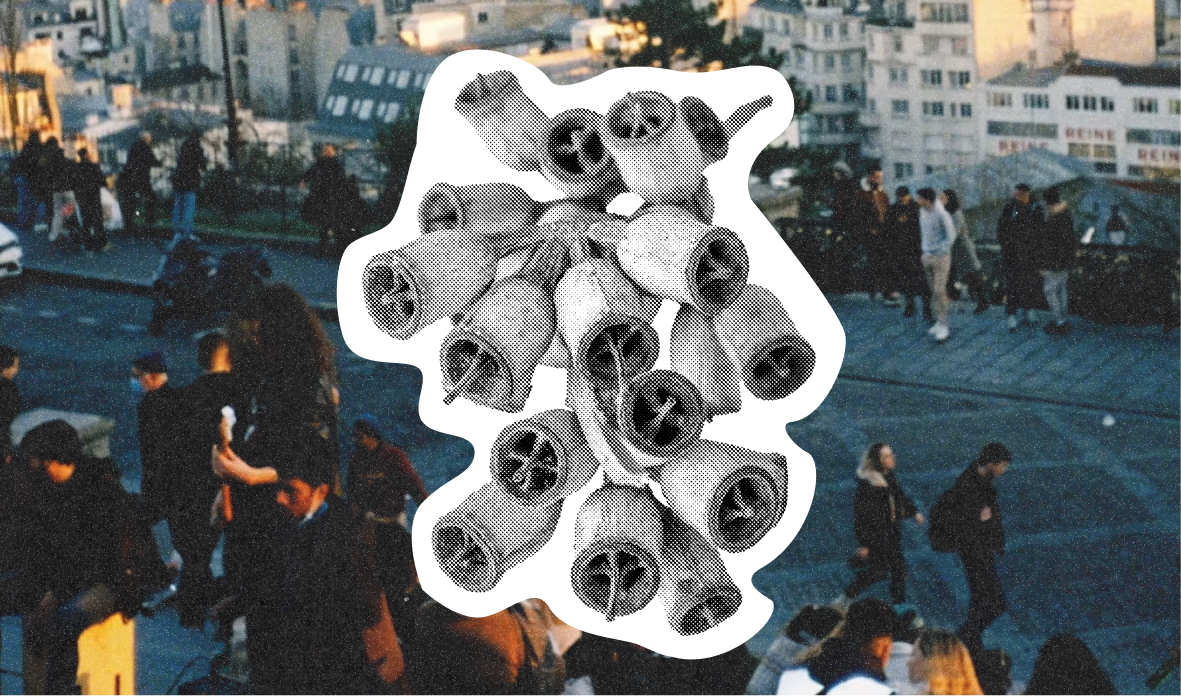
Earn rewards when you shop at sustainable brands that are measurably lowering emissions.
Screenshot commons app
get the app

EARN REWARDS FOR SUSTAINABLE SPENDING

From thrift stores to public transit, earn rewards on thousands of climate-friendly purchases.